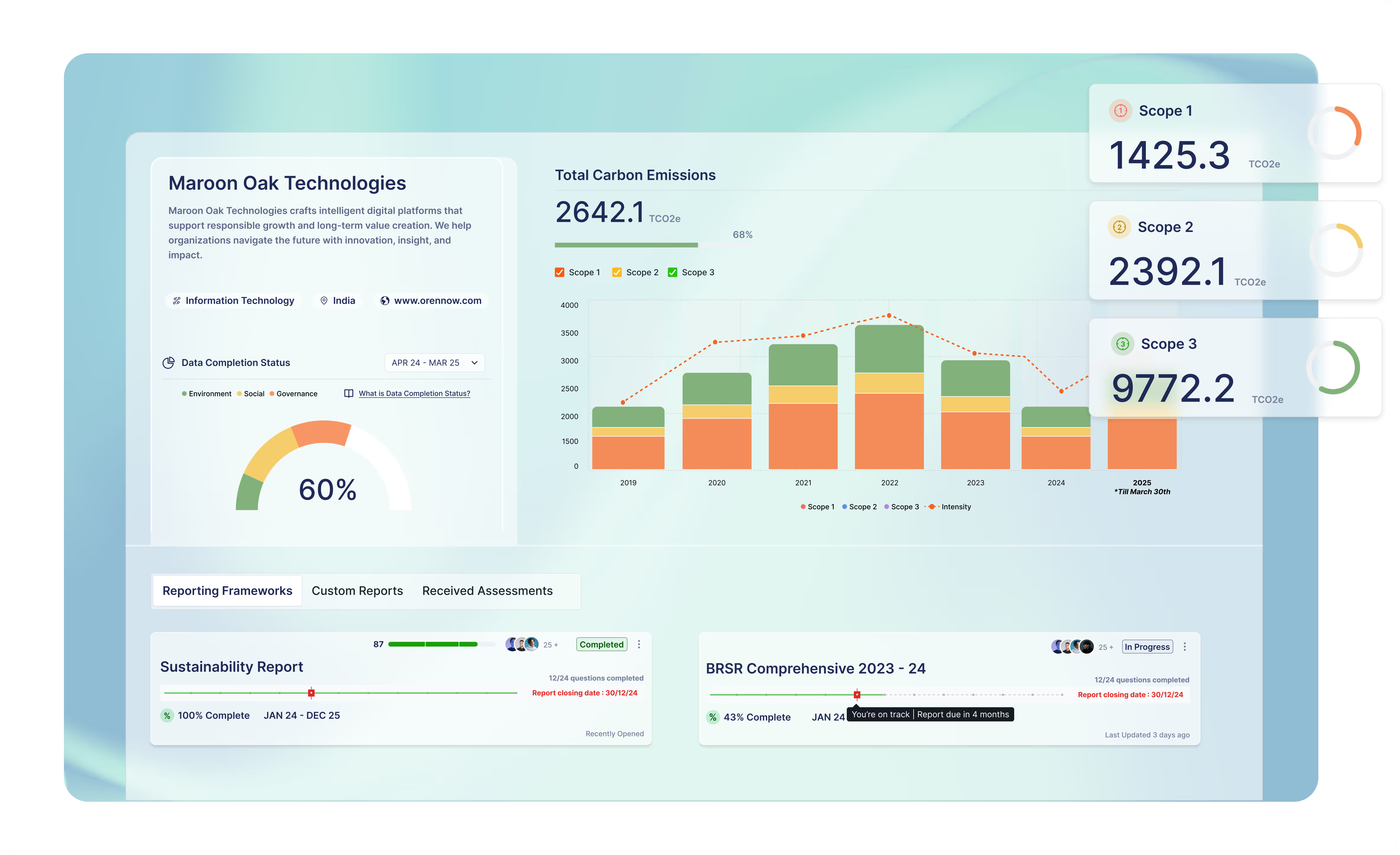
Understanding Carbon Footprint and Its Calculation

Carbon footprint refers to the total greenhouse gas (GHG) emissions an organisation generates through its daily operations. It serves as a key indicator of how a company’s activities impact the environment and is typically measured over the course of a financial year. Measuring carbon footprint is important for climate responsibility while offering areas to optimise energy use.
If your organisation is considering taking up this exercise, this guide on carbon footprint is all you need.
What is Carbon Footprint?
Carbon footprint (measured in tonnes of CO₂-equivalent (tCO₂e)) refers to the amount of greenhouse gases released into the atmosphere by the activity of an individual, organisation, community, event, process, service, or product, among others. The greenhouse gases include carbon dioxide, nitrous oxide, methane, and fluorinated gases.
A company’s carbon footprint is determined by the amount of emissions from its own operations (Scopes 1 & 2) and value-chain activities (Scope 3), which often form the largest portions. It includes:
Fuel consumption in company-owned equipment (like generators, boilers, vehicles, etc.)
Emissions from the production of raw materials purchased from suppliers
Transport of inbound goods (truck/ship/air)
Emissions from waste handling, like incineration of hazardous waste, treatment of effluents & sludge disposal
Leakage of refrigerants (HFCs) from AC systems, refrigerators, freezers, or chiller unit leakages in warehouses
Emissions from business travel, hotel stays, and employee commutes
Why Managing Carbon Footprint Matters for Sustainability
Decreasing carbon footprint refers to reducing the emission of greenhouse gases. Hence, the direct and key impact is the benefit to the environment. Here are a few other reasons why management is essential:
Managing the GHG carbon footprint contributes to corporate sustainability. It is because the associated measures allow companies to understand the sources of emissions in an organisation. It also helps to identify the existing issues and manage the company's activities.
It adds to the reputation in the market. The commitment to sustainability and carbon footprint enhances the brand image and hence gains loyalty from eco-conscious consumers and partners.
Further, the numerous carbon footprint-associated regulations have made it necessary for the company to comply with. The companies, hence, need to emphasise carbon footprint audit to meet the investor and customer expectations and comply with laws. Adopting these measures helps the companies to avoid legal and financial consequences.
Management of carbon footprint offers competitive advantages, as companies can outshine their competitors who are not focusing on this aspect. It helps upgrade the position in the market while unlocking new opportunities.
Additionally, the measures contribute to improving the accuracy and quality of Environmental, Social, and Governance (ESG) and sustainability reporting. It enables transparent and data-driven decisions for long-term business resilience.
Types of Carbon Footprint: Scope 1, Scope 2, and Scope 3 Emissions
The Greenhouse Gas (GHG) protocol is the globally recognised standard for measuring and managing greenhouse gas emissions. It classifies emissions into three categories, Scope 1, Scope 2, and Scope 3, to help organisations identify where their carbon output originates. Understanding all three scopes is essential for accurate carbon footprint audits and effective sustainability strategies.
Scope | Definition | Examples |
|---|---|---|
Scope 1 (Direct Emissions) | Emissions released directly from company-owned or controlled sources. These result from on-site fuel combustion or company vehicles | Fuel used in boilers, furnaces, generators, and company-owned cars or trucks |
Scope 2 (Indirect Energy Emissions) | Emissions resulting from the purchased or acquired electricity, heat, steam and cooling | Emissions from grid electricity, heating/steam or cooling |
Scope 3 (Value Chain Emissions) | All other indirect emissions that occur in a company’s value chain, both upstream and downstream. These are often the largest share of total emissions | Purchase goods and services, employee commuting, business travel, and downstream transport |
How to Calculate a Company’s Carbon Footprint
Calculating a company’s GHG carbon footprint is a structured process. It is based on internationally recognised standards such as the GHG Protocol and ISO 14064. These frameworks ensure transparency, comparability, and consistency across different business units and geographies. The process involves the following key steps:
1. Define Organisational and Operational Boundaries
Determine which operations, subsidiaries, and activities fall within the assessment scope. Decide whether the control or equity share approach (as defined by the GHG Protocol) will be used to consolidate emissions.
2. Collect Business Activity Data
Gather quantitative data such as electricity use (kWh), fuel consumption (litres), travel distances (km), and waste generated (kg). This data should represent all facilities and processes across Scope 1, Scope 2, and Scope 3 emission categories.
3. Apply Appropriate Emission Factors
Use the formula below to convert them into CO₂ equivalent (CO₂e) values. The emission factors will be the data obtained from credible databases like GHG Protocol (IPCC), US EPA, or national inventories.
Formula to calculate the company’s carbon footprint: Activity Data * Emissions Factors = GHG Emissions (tCO₂e) |
4. Consolidate and Standardise Results
Aggregate emissions data across geographies and operations using standardised units (for instance, tonnes of CO₂e). Ensure consistency with ISO 14064 verification requirements for corporate-level reporting.
5. Validate and Set Reduction Targets
Review calculations through internal audits or third-party verification. Next, align emission reduction goals with SBTi or national climate targets.
By following this step-by-step approach, companies can produce an accurate and verifiable carbon footprint audit. It will support sustainability strategies and ensure transparent ESG reporting.
Measures Companies Can Adopt to Reduce Their Carbon Footprint
To reduce a company’s carbon footprint, it is a must to plan strategically, carry out data analysis, and take calculated actions. Some measures include:
Adopt renewable energy: Switch to solar, wind, or other renewable energy sources. These power operations can also help reduce direct emissions.
Optimise energy efficiency: Upgrade lighting and HVAC systems. Opt for better industrial equipment to lower operational energy consumption.
Streamline the supply chain: Identify high-emission areas in procurement and logistics. Implement greener practices.
Invest in carbon offset projects: Support verified eco-sustainable projects. This helps balance unavoidable emissions.
Track and report emissions: Monitor carbon output across operations. Look into trends and analyse them. Lastly, report progress through ESG frameworks to maintain transparency and accountability.
Conclusion
Effective management of carbon footprint requires following a structured and clear path involving measurement, management, and reduction. It involves the evaluation of the emissions across all scopes, followed by gaining insights into the environmental impact. Then, the companies take targeted actions to minimise it.
Reducing carbon footprint helps meet sustainability goals and drives long-term business resilience, cost efficiency, and brand credibility. It also allows compliance with updated regulations and helps align with a dynamic market. In fact, the companies that act today can position themselves as responsible and future-ready leaders by exhibiting their commitment to global sustainability.
Frequently Asked Questions (FAQs)
Q1. What is an example of a carbon footprint?
The example of carbon footprint is the emissions produced from daily business operations, such as electricity used in offices and fuel burnt by company vehicles or the manufacturing process.
Q2. How can companies reduce their carbon footprint?
Carbon footprint can be reduced by taking the following measures:
Using renewable energy sources
Adopting sustainable supply chain practices
Minimising waste
Improving energy efficiency
Encouraging green transportation methods
Performing regular emission audits
Investing in carbon offset projects
Q3. What happens if your carbon footprint is high?
A high carbon footprint indicates greater greenhouse gas emissions that lead to environmental harm and regulatory risks. For businesses, it can result in higher operational costs, reduced investor confidence, and damage to brand reputation. Managing and lowering emissions ensures compliance, sustainability, and long-term business growth.
Q4. What is carbon neutrality?
Carbon neutrality refers to balancing the amount of carbon dioxide released with the amount removed from the atmosphere. The aim is to achieve a ‘net zero’ carbon footprint, which means there should be no net increase of greenhouse gases in the atmosphere. It involves reducing emissions and offsetting the ones that cannot be eliminated.
Q5. What greenhouse gases should be reported by the companies?
The greenhouse gases to be covered under the United Nations Framework Convention on Climate Change (UNFCCC) include:
Carbon dioxide
Nitrous oxide
Methane
Fluorinated gases, such as:
Nitrogen trifluoride
Hydrofluorocarbons
Perfluorocarbons
Sulphur hexafluoride

About the author
Olivia Paul
ESG & Sustainability Advisor
Olivia is an ESG & Sustainability Advisor at Oren, focused on ESG reporting and strategy, materiality assessments, GHG inventory, and net-zero roadmaps across manufacturing, financial services, and infrastructure.