What is SBTi?
Science Based Targets initiative (SBTi) is a corporate climate action organisation based worldwide, created in 2015 by four original organisations:
- World Resources Institute (WRI)
- Carbon Disclosure Project (CDP)
- United Nations Global Compact
- World Wide Fund for Nature (WWF)
It makes a strong assumption: the private sector has the power to stop the disastrous climate change, but only when companies are obliged to set targets of emissions reduction based on solid climate science and not on internal convenience.
The initiative establishes the guidelines, instruments, and norms on which businesses engage to establish the pathways of emissions reduction aligned to limit global warming to 1.5 °C and net-zero emissions by 2050 through structured SBTi solutions.
The most notable recent changes in it are the revision of the Corporate Net-Zero Standard (Version 2.0), the draft of which was published in November 2025, and is designed to make science-based climate action more accessible, sector-specific, and accountable.
SBTi Framework – Key Metrics
The scale of SBTi adoption makes the numbers hard to ignore:
- 10,000+ companies now hold SBTi-validated targets, a milestone crossed in January 2026
- 12,000+ companies have committed to or validated targets globally as of December 2025
- 97% growth in validated near-term targets between end-2023 and mid-2025
- 227% surge in companies setting both near-term and net-zero targets in just 18 months
- 41% of global market capitalisation is now covered by companies with SBTi-aligned targets
- Companies with validated SBTi targets grew market value by 16%, outpacing global GDP growth of 11%
Why Science-Based Targets Matter
Science based targets are unique as they are externally tested on what the science demands rather than what a company deems convenient. Such credibility redefines the perception of a business in all the stakeholder relationships it has.
- Investor confidence: Authenticated targets indicate that the company is sincerely committed to improving its climate, which provides institutional investors with the confidence that they can remain and expand their hold.
- Regulatory alignment: SBTi is the de facto proof of 1.5°C alignment under EU CSRD and ESRS, i.e., the proven companies are already audit-ready at the time when compliance deadlines come.
- Strategic clarity: Target-setting brings finance, operations, and sustainability together on a common long-term path supported by SBTi sustainability.
- Supply chain decarbonisation: Scope 3 indicators drive decarbonisation beyond owned activities to the whole value chain.
- Competitive advantage: Validated commitments win procurement contracts, attract talent, and build lasting market trust.
Scope 1, 2 & 3 Emissions Explained
The global standard of emission accounting, the GHG Protocol, divides the carbon footprint of a company into three scopes, all of which require a distinct layer of responsibility. Think of it this way:
- Scope 1 is what you burn
- Scope 2 is what you buy
- Scope 3 is everything else that happens because of you
| Scope | What It Covers | Real-World Example |
|---|
| Scope 1 | Direct emissions from sources owned or controlled by the company | Fuel burned in company-owned vehicles, manufacturing furnaces, or on-site boilers |
| Scope 2 | Indirect emissions from purchased electricity, steam, heating, etc | Electricity consumed at your offices or factories |
| Scope 3 | All other indirect emissions across the upstream and downstream value chain | Business travel, supplier manufacturing, use of sold products, and end-of-life disposal |
In the case of most companies, Scope 3 is the biggest and most complicated of the three categories, which can comprise 80–95% of the overall footprint. SBTi demands that companies establish Scope 3 goals in case such emissions surpass 40% of their total, which, in most sectors, they do.
SBTi Target Types
There are four different types of targets that a company can have based on its climate journey stage and at what sector it is in:
- Near-Term Targets: A 5–10 year environmental emission pledge in keeping with a target of 1.5 °C warming. These are the initiation points of most companies, the short-term, practical steps that prove a believable change in the short term.
- Long-Term Targets: Targets that extend to a period greater than 10 years of submission and are validated against the Corporate Net-Zero Standard.
- Net-Zero Targets: The most ambitious — companies are undertaking to cut at least 90% of their entire value chain emissions (at least 95% of Scope 1 & 2 and 90% of Scope 3) by 2050.
- FLAG Targets (Forest, Land, and Agriculture): FLAG targets are mandatory for those companies that emit large amounts of land-use air pollution. Both the short-term and long-term reductions are required, with the long-term targets established at a minimum of 72% emission reduction by 2050 and a pledge to stop deforestation.
SBTi Target Setting Process
The establishment of science based targets is an organised process supported by SBTi consulting. Here is how the process works, step by step, according to SBTi's official guidelines:
Step 1: Commit
Submit an SBTi Commitment Letter, which formally indicates your desire to establish science-based targets. This will provide your company with a maximum of 24 months to construct and hand in your targets to prove them.
Step 2: Measure Your Baseline
Carry out an overall GHG inventory of Scope 1, 2, and 3. This is the objective background against which you will construct your targets.
Step 3: Select Target Type & Methodology
Choose the appropriate target type — near-term, long-term, or net-zero — and select the relevant SBTi-approved methodology, depending on your industry.
Step 4: Develop Your Targets
Develop your emissions reduction pathway, making sure that it satisfies the coverage limits, temperature alignment conditions, and base year provisions by SBTi.
Step 5: Submit for Validation
Enter targets via the Validation Portal of SBTi; submissions via spreadsheet are no longer accepted since 2026. Technical desk review is done by a Lead Reviewer, and it usually takes a duration of 30–60 business days.
Step 6: Receive Validation & Go Public
Upon approval, targets are placed in the official SBTi database, and your company has six months to officially announce them.
Ready to Set Science-Based Targets?
Not sure where to start with SBTi or how to align your emissions reduction strategy? Our experts can walk you through the process and provide structured SBTi services.
Oren's SBTi Implementation Approach
Majorities of companies are aware that they should take action on climate, yet the disconnect between the desire and an approved SBTi target can be daunting. Oren bridges this gap through SBTi solutions, taking organisations through the SBTi journey with technical accuracy and strategic focus.
In-Depth Emissions Assessment
Oren starts with a thorough overview of your existing emissions footprint in all 3 scopes, pointing out where the material exposures are and what your baseline is before targets are established.
Science-Based Target Selection
Depending on your industry, emissions profile, and business approach, Oren assists you in choosing the appropriate type of target and approach, making sure that your targets are ambitious and also achievable.
Strategic Roadmap Development
Oren creates a highly customised and staged SBTi roadmap that plots your emissions reduction journey to a net-zero future, which is not isolated as a sustainability silo but rather fits with your current operations.
Validation Preparation & Submission Support
Oren prepares your target submission to satisfy the SBTi coverage requirements, optimal temperature alignment requirements, and boundary specifications, minimising the chance of queries or delays in the formal validation check.
End-to-End Implementation Guidance
Validation is not the end but the beginning. Oren assists your team in the implementation process, ensuring that you remain on track with your corporate decarbonisation strategy through measurable progress.
Measuring and Tracking Emissions Reductions
SBTi requires companies to report their full GHG inventory and progress against validated targets annually, making robust carbon accounting a non-negotiable part of the process. Purpose-built SBTi software makes this process significantly more accurate and efficient.
The most widely used emissions tracking frameworks include:
- GHG Protocol: the global standard of measuring Scope 1, 2 and 3 emissions.
- CDP Climate Change Questionnaire: the main channel of disclosure used by companies to make SBTi progress public.
- ISO 14064: internationally adopted standards of GHG measurement, monitoring and verification.
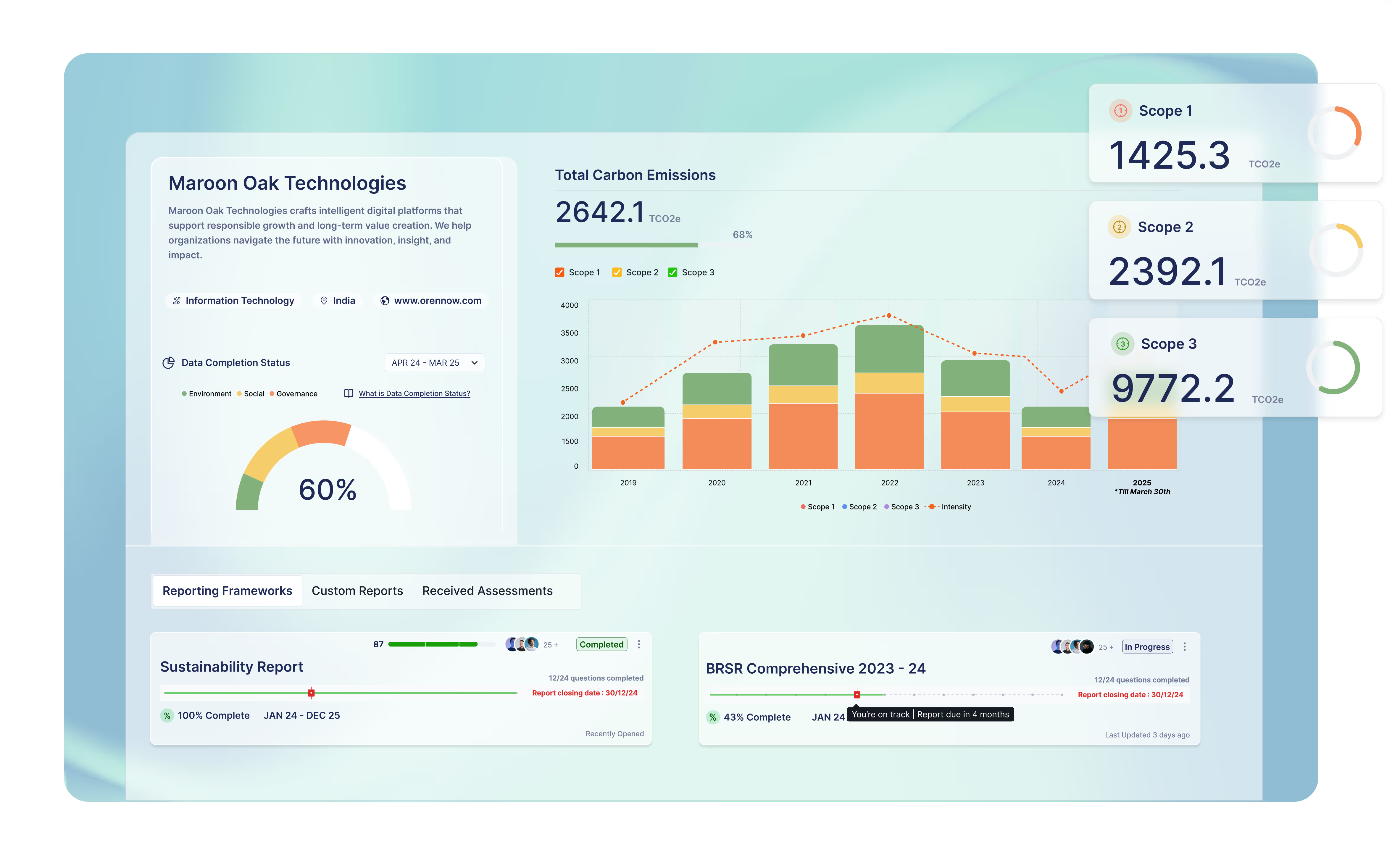
Oren Sustainability Hub (OSH) is built to help measure and track emissions by:
- Consolidating emissions data across scopes
- Tracking progress against SBTi milestones
- Keeping reporting aligned with evolving frameworks
So companies are never caught off guard during annual disclosure cycles.
Consequences of Not Setting Science-Based Targets
As validated targets become the standard of expectation, those companies that lack them are hit with real penalties:
- Investor pressure: Capital is increasingly flowing toward SBTi-aligned portfolios, leaving unvalidated companies deprioritised.
- Regulatory risk: As EU CSRD and ESRS become stricter, firms that do not have structured targets have compliance gaps, which translate into increasing costs over time.
- Transition risk: Noticeable expenses faced by businesses in an abrupt fashion are imminent when there is no science-based roadmap in place to guide changes in carbon pricing and supply chain expectations.
- Reputational impact: Greenwashing questioning is on the rise, unproven claims on climate are emerging as a brand and legal liability.