ESG Reporting For Businesses Beyond A Compliance Checklist
ESG reporting explained for companies with meaning, report contents, benefits, challenges, India’s SEBI BRSR guidance, who rates performance, plus a clear future outlook.
The Carbon Border Adjustment Mechanism (CBAM EU) is the European Union's landmark climate policy designed to address carbon leakage by levelling the playing field between EU producers and their imports. It provides a structured framework for CBAM reporting and CBAM compliance, enabling companies to measure, report, and account for embedded carbon emissions in goods exported to the EU.
By complying with CBAM requirements through a structured CBAM solution, businesses can maintain market access to the EU, avoid potential penalties, and demonstrate leadership in CBAM ESG compliance and low-carbon trade. The mechanism encourages companies to quantify their carbon footprint, adopt cleaner production methods, and integrate carbon considerations into their supply chain decisions.


























The Carbon Border Adjustment Mechanism (CBAM) policy was introduced by the European Union (EU) in October 2023 and forms the foundation of mandatory CBAM compliance for carbon-intensive imports. It places the import duty on the greenhouse gas (GHG) emissions in the production of selected imports. The industries currently covered under this policy include aluminium, cement, steel, fertilisers, electricity, and hydrogen.
The CBAM policy is aimed at the prevention of ‘carbon leakage’ (when companies move production to countries with weaker climate rules and thus lower cost of production). This is how it ensures fair competition between EU and non-EU producers.
Companies outside the EU must comply with CBAM if they export covered products, making CBAM compliance services and reliable CBAM consulting critical for accurate emissions reporting and cost management. High-emission products will become costlier, thus making low-carbon producers more competitive.
The process of CBAM involves the following aspects:
CBAM applies to imports of carbon-intensive goods such as cement, electricity, fertilisers, aluminium, steel, iron, and hydrogen. The imports from countries already in the EU ETS, such as Norway, Liechtenstein, Iceland, and Switzerland, are exempted.
The companies importing CBAM goods need to apply from January 1, 2025, to become Authorised CBAM Declarants. The restrictions will be imposed from January 1, 2026, allowing only registered declarants to import CBAM goods.
Importers need to submit quarterly CBAM reports using a structured CBAM reporting tool, detailing the quantity of imports, direct and indirect embedded emissions, and any carbon price already paid in the country of origin.
These reports are mandatory but do not involve financial obligations at this stage. The submitted reports are further processed for data verification if actual values are used. They are verified by a certified testing body.
Importers must buy CBAM certificates that correspond to the amount of embedded carbon dioxide equivalent (CO2e) emissions in their imports. The price of each certificate mirrors the average EU ETS allowance price. Any carbon tax paid abroad is deducted to avoid double-charging.
By May 31st each year, authorised declarants must file an annual CBAM declaration showing imports and related emissions from the previous year. The declaration is compared against the number of certificates purchased. If too few certificates are acquired, financial sanctions could be imposed.
The CBAM is divided into two phases: the transitional phase and the definitive regime. While the first one deals with the reporting aspect, the second will be concerned with financial obligations. Here are the detailed insights into the two phases:
From October 2023 to the end of December 2025, the companies are obligated to report on their emissions. There are no financial obligations within the mentioned period. This transitional phase allows businesses to implement CBAM reporting software, test reporting workflows, collaborate with suppliers, and address data gaps before financial obligations begin. They can also prepare to become an Authorised CBAM Declarant if continuing imports into 2026.
Reporting obligations include:
The reports must be filed by the end of the month after the quarter.
This phase will involve stricter CBAM reporting, where the companies will be financially obligated and increasingly dependent on reliable CBAM reporting services for annual declarations and certificate management. The importing companies will submit annual reports and purchase CBAM certificates to cover embedded emissions.
Here is what specifically the companies must do:
Companies can choose between two methodologies to calculate emissions:
Before 2026, the companies must register as an authorised CBAM declarant with their national authority. They will need to plan their budget for buying certificates, collecting verified emissions data for each product, and ensuring suppliers can provide accurate information. Any delays, missing data, or mistakes could lead to higher costs or penalties.
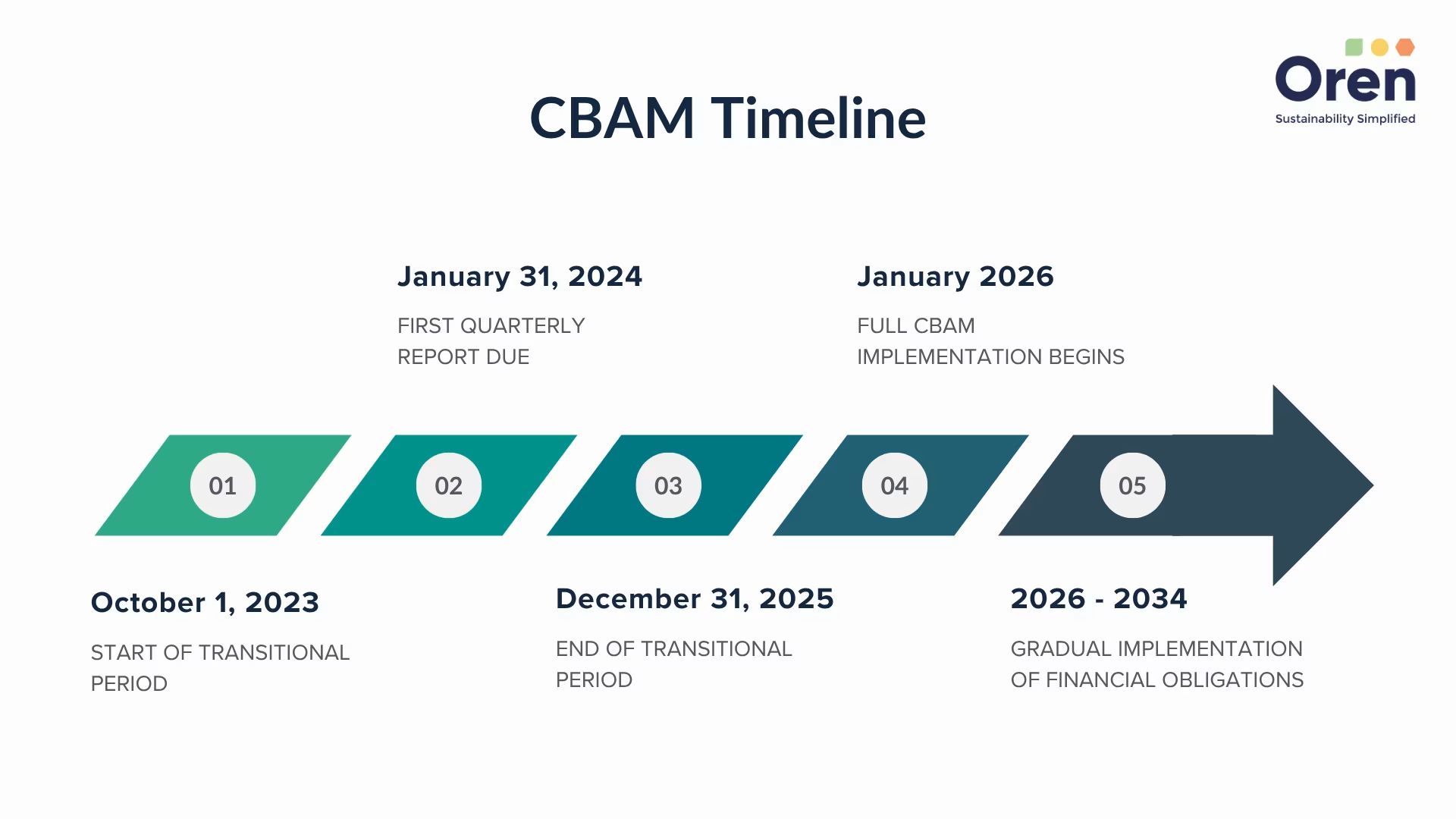
The EU proposed the Omnibus or Simplification Package in early 2025. These are a set of updates designed to streamline CBAM processes and support its proper implementation from 2026.
The implications of CBAM for importers are stated as follows:
Importers will face increased costs due to the requirement of CBAM certificate purchases. Thus, there will be a rise in product prices across sectors like aluminium, steel, and cement. Further, developing countries will also face high costs to comply with CBAM when exporting to the EU. The economic impact on these countries could exceed the revenues generated by the CBAM, potentially causing financial strain.
Companies must adjust supply chains by working with suppliers who can provide verified emissions data, increasing contractual and compliance complexity. The businesses operating in developing countries may lack time, resources, and systems to align with the EU's carbon pricing, thus creating operational difficulties.
Importer firms will be pushed to accelerate low-carbon transitions, invest in greener technologies, and reorient sourcing toward suppliers with lower embedded emissions. Exporters may need to modernise production and adopt low-carbon technologies to remain competitive in the EU market. Other countries will also need to negotiate with the EU to secure fairer implementation and protect trade interests.
Failure to submit accurate reports or surrender certificates on time can result in financial fines.
Persistent non-compliance could lead to restrictions or even loss of access to the EU market.
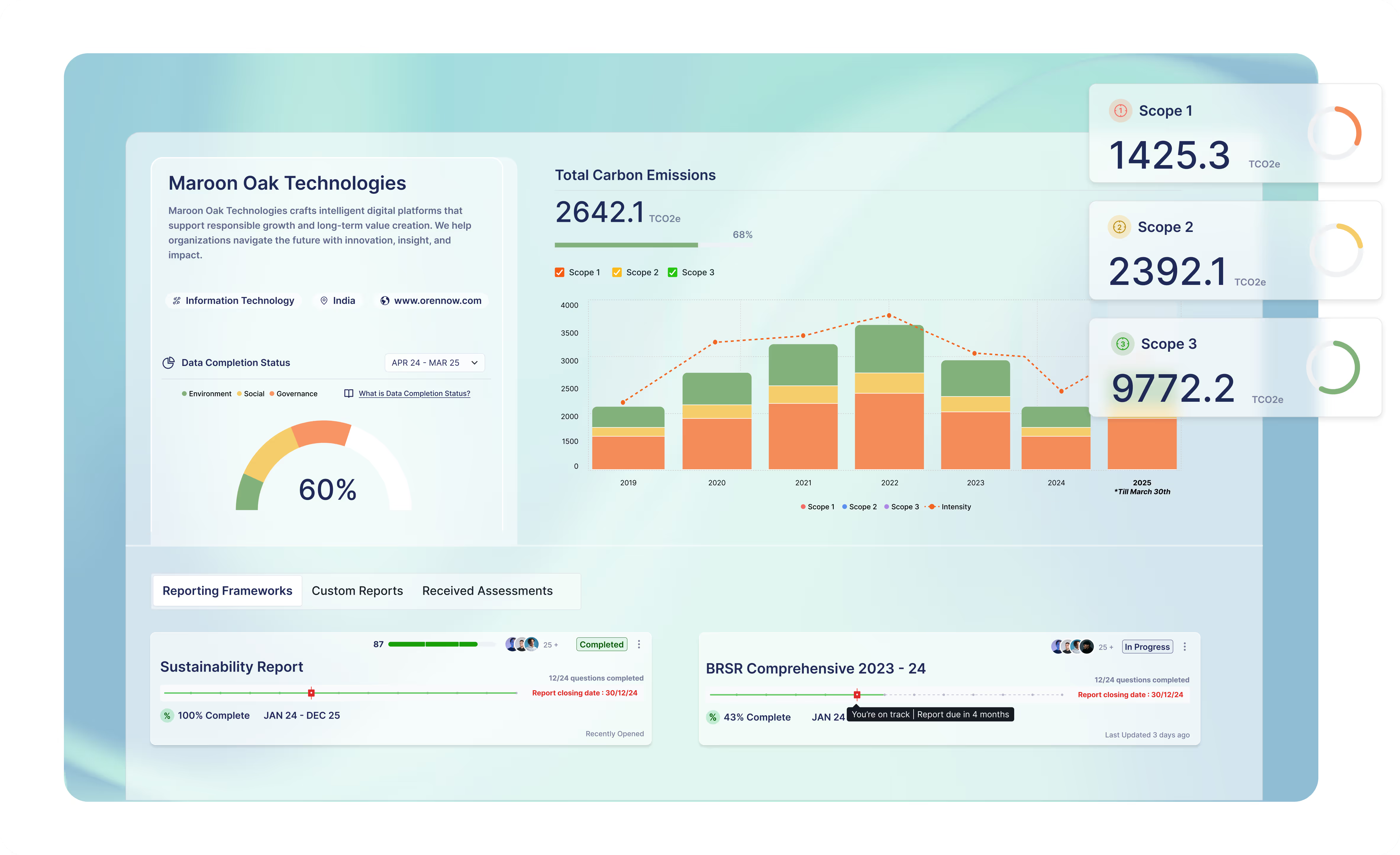
CBAM is part of a broader climate and sustainability regulatory landscape. It does not operate in isolation and links directly with the EU Emissions Trading System (EU ETS). It ensures that imported products face similar carbon costs as domestic producers.
CBAM supports companies in meeting ESG reporting rules, like CSRD and GHG protocol. It eases the companies to include carbon compliance in their existing sustainability efforts. Moreover, it also prepares them for future global carbon pricing rules since similar systems may appear in other countries.
Imports like steel and aluminium will need CBAM certificates, and more products will be covered as free ETS allowances are phased out from 2026 to 2034. CBAM and ESG reporting will be easier due to the use of consistent methods such as GHG protocol standards, lifecycle assessments, and verified supplier data.
A practical exporter briefing covering CBAM transitional and definitive-phase obligations through 2034.
Built for EU importers and exporters
Covers transitional and definitive-phase CBAM obligations through 2034.
Embedded emissions, calculated correctly
Methods for steel, aluminium, cement, fertilisers, hydrogen, and electricity.
ACMA-tested guidance
Recorded with India’s Automotive Component Manufacturers Association — real exporter scenarios.
Future-ready compliance
Get ready for product-scope expansion and the free-allowance phase-out by 2034.

“Oren is very professional, and they deliver their services and commitments in a time-bound manner. The products they have developed are absolutely topnotch and it caters to all our requirements.”


“Oren's technology and expert advisory helped us overcome data management hurdles and navigate stakeholder engagement, materiality assessment and quantifying environmental impact to publish our first BRSR report.”


“Oren immensely helped us with our Scope 1 and Scope 2 reporting. Overall, the team is well updated and very supportive - and they were always just a call away. I definitely recommend Oren to anyone who is looking for assistance in their ESG journey.”


“Oren's expertise has been instrumental in driving our ESG achievements, consistently guiding us with professionalism, reliability, and timely execution. Their outstanding products not only surpassed expectations but also fully complied with Metrochem API Industries' ESG standards.”

“Oren is very professional, and they deliver their services and commitments in a time-bound manner. The products they have developed are absolutely topnotch and it caters to all our requirements.”
“Oren's technology and expert advisory helped us overcome data management hurdles and navigate stakeholder engagement, materiality assessment and quantifying environmental impact to publish our first BRSR report.”
“Oren immensely helped us with our Scope 1 and Scope 2 reporting. Overall, the team is well updated and very supportive - and they were always just a call away. I definitely recommend Oren to anyone who is looking for assistance in their ESG journey.”
“Oren's expertise has been instrumental in driving our ESG achievements, consistently guiding us with professionalism, reliability, and timely execution. Their outstanding products not only surpassed expectations but also fully complied with Metrochem API Industries' ESG standards.”
The Carbon Border Adjustment Mechanism (CBAM) is a policy initiative by the European Union (EU) designed to place a carbon price on imports of certain goods. This mechanism ensures that imported products are subject to the same carbon costs as those produced within the EU, thereby preventing "carbon leakage," where companies might relocate production to countries with less stringent emissions regulations.
CBAM initially targets imports of specific carbon-intensive products, including steel and iron, aluminum, cement, fertilizers, and electricity. These sectors are prioritised due to their significant carbon emissions during production.
The importing company in the European Union (EU) or its authorised indirect customer representatives are responsible for complying with CBAM. They must accurately report emissions embedded in imported goods, purchase the required CBAM certificates, ensure data verification, and coordinate with suppliers for relevant information.
Yes, non-EU companies with substantial activities in the EU are subject to the CSRD. Specifically, companies generating a net turnover of more than €150 million in the EU and having at least one subsidiary or branch in the EU meeting certain criteria will need to comply with the CSRD requirements.
Yes, to reduce administrative burdens, the EU has proposed exemptions for imports below certain thresholds. For instance, imports with a total value not exceeding €150 are exempted from CBAM obligations. Additionally, countries with carbon pricing mechanisms equivalent to the EU's may have adjusted obligations under CBAM.
The information essential for CBAM reporting includes: type and quantity of imported goods, their Combined Nomenclature (CN) codes, country of origin, production facility, and detailed production processes. If the information in CBAM reports is incorrect, the companies may face penalties, fines or other enforcement actions in the definitive phase.
Reporting declarants may face penalties ranging between EUR 10 and EUR 50 for each tonne of unreported emissions. The mentioned penalties apply if the reporting declarant either fails to submit a CBAM report or submits an incorrect/incomplete report and does not correct it after the competent authority requests amendments.
The EU CBAM uses certificates linked to the EU ETS. It covers electricity and limits indirect emissions to cement and fertilisers with annual reporting. The UK CBAM applies a direct tax and excludes electricity. It covers indirect emissions across all sectors and will begin annual reporting in 2027.
While the EU's Carbon Border Adjustment Mechanism (CBAM) is referred to as a carbon pricing tool, the UK's CBAM operates as a tax. The EU's CBAM works similarly to an import duty or tax on specific imported goods, requiring importers to purchase certificates to cover the carbon emissions embedded in certain imported goods.
ESG reporting explained for companies with meaning, report contents, benefits, challenges, India’s SEBI BRSR guidance, who rates performance, plus a clear future outlook.

Learn sustainability reporting with what to include and how frameworks fit. See where sustainability reporting standards apply, plus how disclosure supports ESG outcomes.

Navigating ESG (Environmental, Social, and Governance) compliance is an intricate process that demands accurate reporting and effective risk management. This article delves into the challenges companies face in selecting appropriate ESG frameworks, managing evolving regulations, and harmonizing global standards like those from the EU with domestic requirements. The difficulty in quantifying sustainability and translating qualitative data into reliable indicators further complicates ESG reporting. Consultancies play a vital role in helping businesses overcome these hurdles through expert data management and risk mitigation strategies, ensuring compliance and enhancing sustainability efforts. Companies that adopt a strategic approach to ESG compliance are better positioned for success in today’s regulatory-driven market.

ESG (Environmental, Social, and Governance) reporting has become an essential component of corporate strategy, offering significant financial advantages to companies. This article explores how ESG reporting provides competitive advantages, helps mitigate risks, reduces operational costs, and lowers the cost of capital. By adopting sustainable practices, businesses not only enhance their brand and attract eco-conscious investors but also build long-term financial stability. The role of CFOs is crucial in aligning ESG metrics with financial strategies, ensuring compliance, and balancing both financial and non-financial performance indicators to drive sustainable growth.