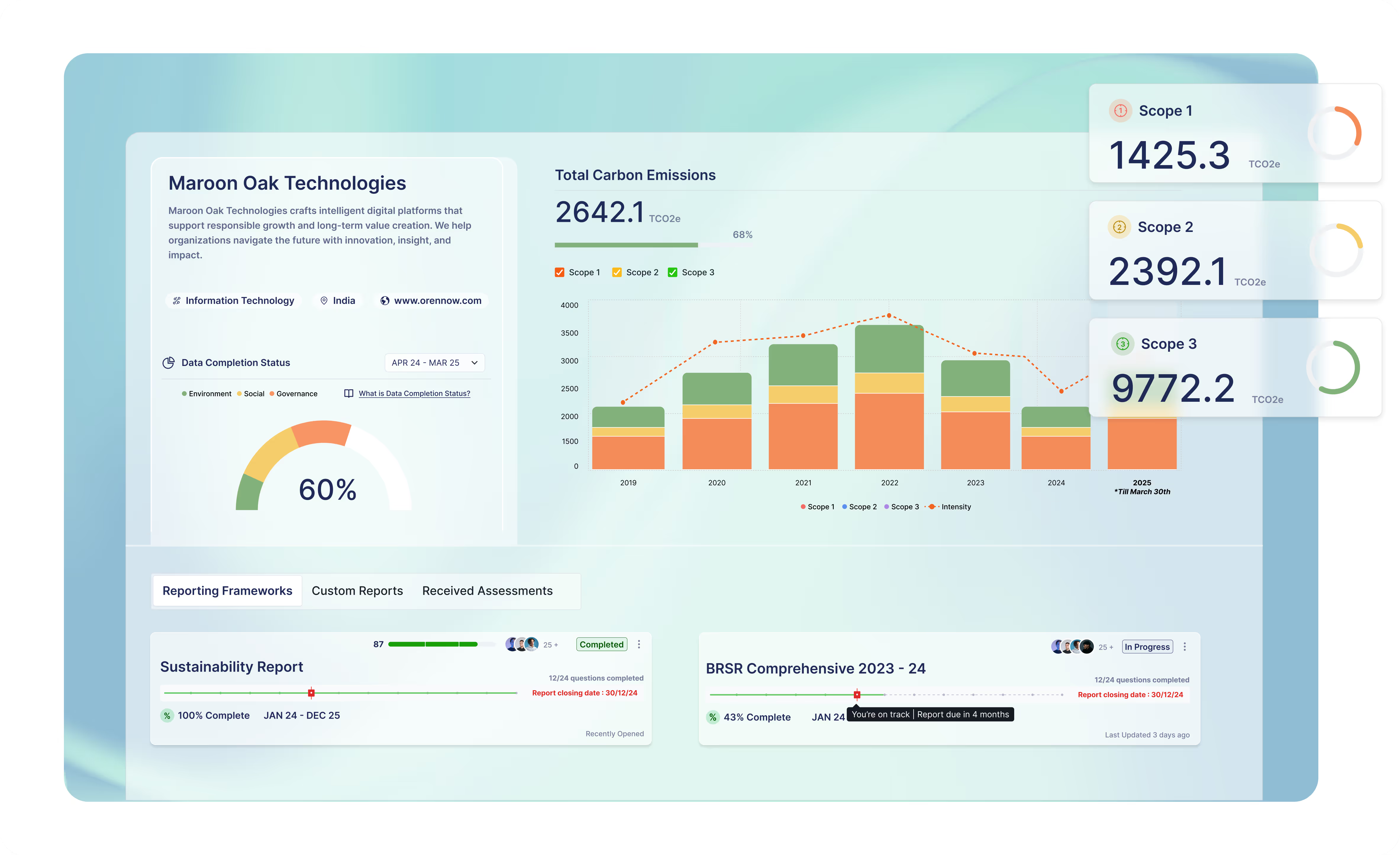
Understanding ESG Reporting: Its Importance for Your Business

ESG reporting has become an essential practice for companies aiming to demonstrate their commitment to environmental, social, and governance (ESG) criteria. This article delves into what ESG reporting is, why it matters, and how it can impact your business and stakeholders.
What is ESG Reporting?
ESG reporting refers to the disclosure of a company's performance in three critical areas: Environmental, Social, and Governance. This type of reporting is intended for investors, employees, media, and other stakeholders, providing a comprehensive view of a company's practices and impact.
1. Environmental Impact
The environmental component of ESG reporting focuses on a company’s efforts to minimize its carbon footprint, manage resources efficiently, and reduce pollution. Companies often report on their greenhouse gas (GHG) emissions, energy consumption, and waste management practices. Key metrics include carbon neutrality, carbon credits, and efforts to achieve net zero emissions.
2. Social Impact
Social reporting assesses how a company manages relationships with employees, suppliers, customers, and the communities where it operates. This includes evaluating labor practices, human rights, diversity and inclusion efforts, and community engagement. Reports might also cover hazardous waste management and corporate responsibility initiatives.
3. Governance
Governance in ESG reporting examines the internal practices and policies related to leadership, executive pay, audits, and shareholder rights. It includes the structure of the ESG committee, compliance with regulations, and adherence to best practices such as those outlined by the Global Reporting Initiative (GRI) and the Task Force on Climate-Related Financial Disclosures (TCFD).

Why is ESG Reporting Important?
The importance of ESG reporting has escalated following global climate agreements and increasing regulatory pressures. Here’s why ESG reporting is crucial for companies:
1. Investor Confidence
Investors are increasingly scrutinizing ESG metrics to gauge a company's long-term viability and risk profile. High ESG scores often correlate with lower financial risks and better management practices. Consequently, companies with strong ESG performance might attract more investment due to their perceived stability and commitment to sustainable practices.
2. Regulatory Compliance
Governments worldwide are tightening regulations around ESG reporting. In countries like India, where sustainability reporting has become more stringent, companies must adhere to the Business Responsibility and Sustainability Report (BRSR) guidelines and other local standards. Compliance helps avoid legal pitfalls and enhances a company’s reputation.
3. Market Position
Adopting robust ESG strategies can provide a competitive edge. Companies that align with stakeholder capitalism and demonstrate effective ESG practices may outperform those that do not. This alignment often results in better market positioning and increased consumer trust.
4. Access to Capital
Strong ESG performance can lead to more favorable terms for capital acquisition. Investors are more likely to provide funding at a lower cost to companies with transparent and effective ESG strategies. This access to capital is crucial for financing sustainable projects and innovations.

Trends and Challenges in ESG Reporting
1. Growing Standards and Frameworks
Several frameworks guide ESG reporting, such as the GRI standards, the Sustainability Accounting Standards Board (SASB), and the EU Taxonomy. Adhering to these frameworks helps standardize reports and improve comparability. The increase in ESG rating agencies and assessments, including EcoVadis and GRESB, also reflects the growing importance of ESG metrics.
2. Knowledge Gaps and Reporting Standards
Despite the progress, there are still significant gaps between what companies report and what investors and regulators seek. Discrepancies in reporting standards, high costs of data collection, and non-mandatory reporting regimes contribute to this issue. Companies can address these challenges by collaborating with experts to integrate balanced ESG strategies into their performance metrics.
3. Future Outlook
Over the next decade, ESG reporting is expected to become a mandatory component of annual financial disclosures for all businesses. This shift will likely standardize reporting practices and enhance the overall quality of ESG data available to stakeholders.

Conclusion
ESG reporting is more than a regulatory requirement; it is a strategic tool that can enhance a company's transparency, market position, and investor appeal. By understanding and implementing effective ESG reporting practices, companies can better manage risks, achieve compliance, and drive long-term success.
If your company is navigating its ESG journey, partnering with experts and leveraging advanced ESG solutions can streamline the process and ensure your reports meet the highest standards. Embracing ESG reporting not only aligns with global sustainability goals but also positions your business for future growth and resilience.
Frequently Asked Questions (FAQs)
Q1. What is ESG reporting?
ESG reporting is how a company discloses its non-financial performance across Environmental, Social, and Governance areas. It covers things like emissions, energy use, labour practices, diversity, and governance standards. The goal is to give investors, regulators, employees, and other stakeholders a clear, structured view of how the company is performing beyond just financial numbers.
Q2. Why is ESG reporting important for businesses?
ESG reporting matters because it shapes how investors assess risk, how regulators view compliance, and how customers perceive brand trust. Strong ESG disclosures attract investment at better terms, reduce the risk of regulatory penalties, and create a competitive edge. They also signal that the business is thinking long-term, not just chasing quarterly numbers.
Q3. What are the three pillars of ESG reporting?
ESG reporting covers three pillars. Environmental covers carbon emissions, energy use, waste, and water. Social covers employee practices, diversity, human rights, community engagement, and supply chain ethics. Governance covers leadership structure, board diversity, executive pay, anti-corruption practices, and overall ethical standards. A strong ESG report addresses all three with measurable data.
Q4. What are the main ESG reporting frameworks?
The most widely used frameworks include the Global Reporting Initiative (GRI) for broad sustainability disclosures, SASB for industry-specific financial materiality, TCFD for climate-related financial risks, IFRS S1 and S2 as the new global baseline, and BRSR for listed Indian companies. Many companies use a combination depending on their geography and audience.
Q5. Is ESG reporting mandatory?
It depends on where the company operates and how it's listed. In India, BRSR is mandatory for the top 1,000 listed companies. In the EU, CSRD applies to large companies and many listed SMEs. Globally, IFRS S1 and S2 are becoming the new baseline. For most other companies, ESG reporting remains voluntary but is increasingly expected.
Q6. What are the benefits of ESG reporting?
ESG reporting builds investor confidence, supports regulatory compliance, improves brand reputation, and opens access to better financing terms. It also surfaces internal inefficiencies the company can fix, helps attract and retain talent who care about sustainability, and makes the business more resilient to climate-related and stakeholder-driven risks.
Q7. How often should companies report ESG?
Most companies publish ESG reports annually, often alongside their financial annual report. Some larger firms also publish quarterly ESG updates for investors or interim climate-related disclosures. The frequency depends on the framework being used and the regulatory requirements that apply, but annual disclosure is the established baseline.
Q8. What are the biggest challenges in ESG reporting?
Common challenges include collecting reliable data across business units and geographies, navigating multiple overlapping frameworks, meeting evolving regulations, getting third-party assurance, and avoiding greenwashing. Many companies also struggle with measuring Scope 3 emissions and engaging suppliers on ESG data, which takes time and cross-functional coordination.
Q9. How is ESG reporting different from sustainability reporting?
The two terms get used interchangeably, and in practice most reports cover the same ground. Sustainability reporting tends to focus more on long-term environmental and social impact. ESG reporting frames the same content through an investor lens, with stronger emphasis on governance, financial materiality, and risk. The modern version of both covers all three areas.
Q10. How can a company get started with ESG reporting?
Start with a materiality assessment to figure out which ESG topics matter most for your business. Choose a primary reporting framework (BRSR, GRI, IFRS S1/S2, or similar). Set up reliable data collection across environmental, social, and governance areas. Define clear targets. Get the first report assured by an independent party if possible. Build from there year on year.

About the author
Abhirup Das
Head of ESG & Sustainability Advisory
Abhirup leads Oren’s ESG & Sustainability Advisory practice, blending industrial engineering, digital transformation, and ESG governance to translate compliance into long-term financial and strategic value.