What is Corporate Governance?
At its core, corporate governance is essentially a framework of rules, practices, and procedures that govern and control a company and hold it accountable. It defines how decisions are made at the top, how authority is shared throughout the board and management, and the way interests of the shareholders, employees, and regulators are balanced.
A well-structured corporate governance framework covers everything from board composition and executive oversight to internal controls, disclosure obligations, and ethical conduct. Governance is not a one-size-fits-all — it varies by sector, company size, and the regulatory environments in which a business operates.
Weak governance rarely stays invisible for long. Here is why corporate governance matters in sustainable business practice:
- Regulatory compliance: Robust governance ensures organisations meet their legal and disclosure obligations, reducing the risk of penalties, investigations, or sanctions from regulators.
- Investor confidence: Both institutional and retail investors always prefer well-governed companies. Transparent structures are an indicator of responsible and accountable management of capital.
- Long-term credibility: Firms with a good record of governance attract more talent, have healthier stakeholder relationships, and are in a better position to overcome periods of uncertainty.
- Quality of decisions: Well-defined structures of accountability imply quicker and more informed decisions without any blind spots at the top leadership level.
Not sure where your governance structure stands?
Most organisations have gaps, and most don't realise until it is too late. Talk to an Oren expert and find out exactly where your corporate governance services need strengthening.
Key Pillars of Corporate Governance
Effective corporate governance solutions are built on five interdependent pillars. One weakness in one area may compromise the integrity of the entire governance structure.
01
Board Accountability
An effective board has the right balance of skills, independence, and diversity to offer significant oversight to management. Independent directors are essential to diminish conflicts of interest and ensure executive decisions can be contested constructively.
02
Transparency & Disclosure
Timely and precise disclosure enables investors, regulators, and stakeholders to make informed decisions. This involves financial reporting, material risk disclosures, and sustainability information presented in a structured process of corporate governance reporting.
03
Risk Management
Boards are supposed to detect, track, and control material risks before they get out of control. Good risk governance makes sure discussions occur at the board level, not just within management.
04
Ethics & Anti-Corruption
An effective code of conduct, together with whistleblower systems, establishes the internal control mechanisms that ensure misconduct is not buried or ignored.
05
Shareholder Rights
Fair treatment of all shareholders — both minority and majority — involves equal access to information, equal voting rights, and immunity against decisions that benefit a few at the expense of others.
Corporate Governance Frameworks & Regulations
Organisations do not operate in a governance vacuum. There are a number of frameworks and regulations that describe what corporate governance advisory looks like in practice, each with its scope, governing body, and applicability.
The three most relevant frameworks for companies navigating governance disclosures today are:
| Framework | Governing Body | Applicability for Companies |
|---|
| BRSR (Business Responsibility & Sustainability Reporting) | Securities and Exchange Board of India (SEBI) | Mandatory for top 1,000 listed companies in India under SEBI LODR Regulations; BRSR Core disclosures with assurance phased from FY 2023-24 onwards. |
| GRI 2: General Disclosures 2021 | Global Reporting Initiative (GRI) | Relevant to any organisation reporting under the GRI Standards: governance structure, decision-making, board composition, and strategy. |
| TCFD (Task Force on Climate-related Financial Disclosures) | Financial Stability Board (FSB) | Applicable to companies globally, especially those with climate risks and opportunities exposure in their operations and that are obligated to report on the management of climate risks and opportunities. |
Key Governance Policies Every Organisation Needs
Strong corporate governance solutions begin with appropriate policies. Oren assists organisations in structuring and applying each of these into compliance-ready frameworks.
Code of Ethics
Setting the standards of conduct expected from all employees, officers, and directors, promoting integrity and ethical behaviour across the organisation.
Anti-Corruption Policy
Establishing a zero-tolerance approach to bribery and corruption, with clear guidelines and reporting mechanisms that hold up to regulatory scrutiny.
Whistleblower Policy
Gives employees a confidential channel to report unethical conduct without fear of retaliation — one of the most scrutinised controls by investors and regulators alike.
Conflict of Interest Policy
Provides clear procedures for identifying, disclosing, and managing conflicts of interest to maintain objectivity in decision-making.
Data Privacy Policy
Assures that personal information is managed according to international privacy laws, and that data recorded is documented and auditable.
Environmental Policy
Embedding sustainability objectives into the corporate governance structure to ensure sustainability goals are traceable and disclosure-ready.
How to Structure Your Board for ESG Governance
Board structure directly determines the quality of governance oversight an organisation can provide. Oren's corporate governance services help organisations get this right from the outset.
Diverse Composition
Successful boards combine people with different backgrounds, knowledge, and views, providing informed decision-making at the leadership level.
Committee Oversight
Specialist committees — Audit, Risk, Compensation, and Nomination — provide focused oversight of critical areas. For companies under ESG disclosure mandates, a dedicated Sustainability Committee is increasingly a regulatory expectation.
Oren's Corporate Governance Approach
Oren works with organisations as a hands-on corporate governance advisory partner, guiding them from governance gaps to disclosure-ready outcomes at every step of the journey.
01
Governance Assessment
Oren categorises your current governance framework — including any gaps in policies, board controls, risk management, and disclosure practices — against frameworks such as BRSR, GRI 2, and TCFD.
02
Framework Alignment
Oren's governance advisors streamline your organisation to the standards most important to your regulators and investors, so there is no ambiguity, policies are documented, and nothing falls between the cracks.
03
Data Consolidation
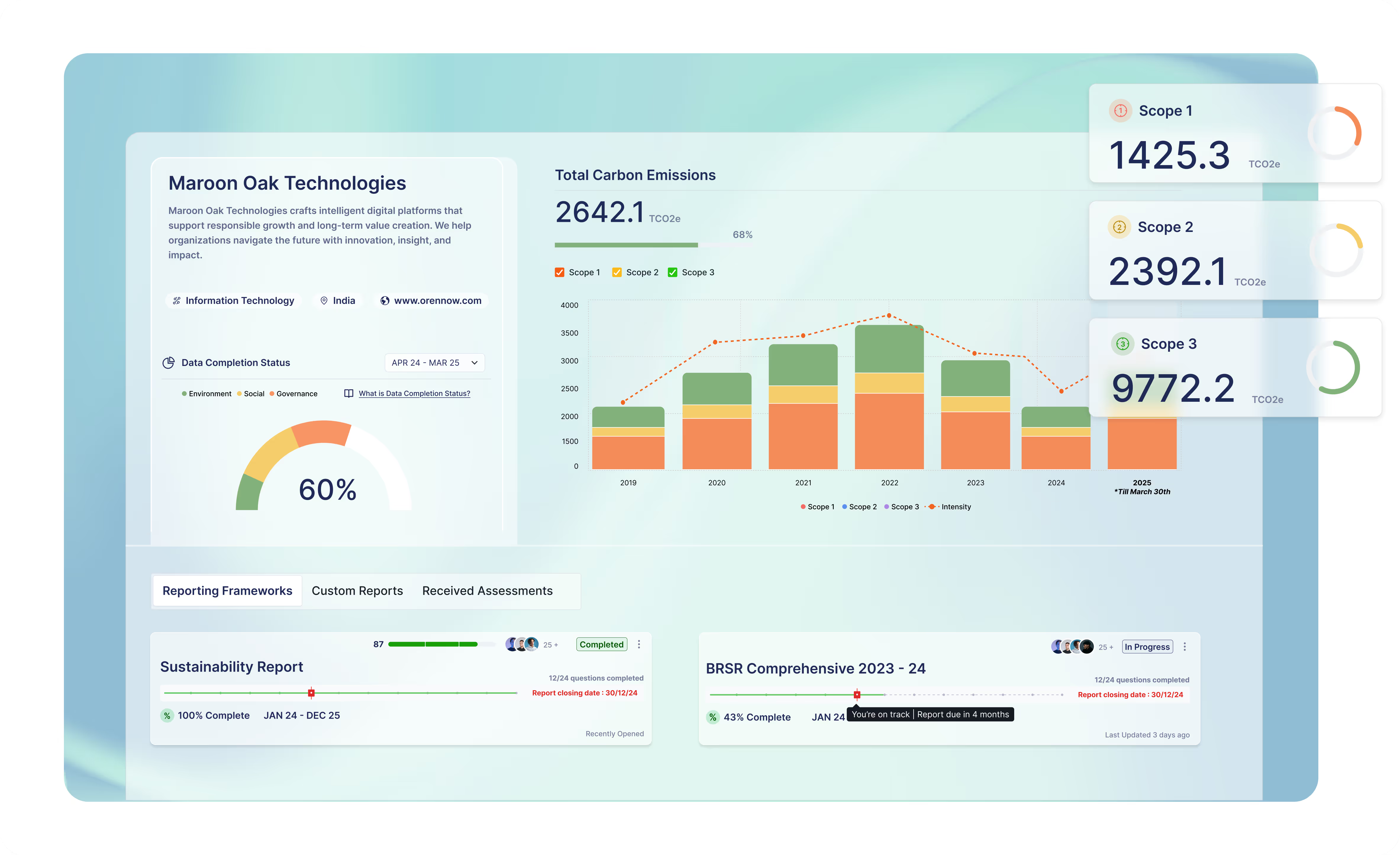
Oren pulls together all governance-related data in a single location: ESG maturity scores, board actions, risk registers, and compliance milestones — so your team always has a single, trusted source of truth.
04
Advisory & Stakeholder Engagement
With the data in order, Oren supports materiality assessments, stakeholder engagement, and the development of governance narratives that are credible, consistent, and built to withstand investor scrutiny.
05
Reporting & Disclosure
Oren ensures your corporate governance reporting — whether BRSR or TCFD — is correct, formatted, and in line with the standards your stakeholders expect in reality.
Let's build your governance structure.
Strong corporate governance services are not built on templates. Connect with Oren and we will tailor a governance framework to your sector, obligations, and reporting standards.
Consequences of Poor Corporate Governance
Poor corporate governance services are not merely a compliance gap — they are a literal business risk. Some of them include:
1. Regulatory fines
Failure to comply with frameworks may lead to heavy fines, sanctions, and legal action against directors and officers.
2. Loss of investor confidence
When governance is flawed, it is an indicator of financial problems and ineffective management, prompting investors to withdraw capital and increasing the cost of future fundraising.
3. Operational disruption
Poor internal controls and accountability gaps — the direct result of weak corporate governance services — create systemic inefficiencies that compound over time.
4. Stock exchange delisting
In extreme instances, a company that constantly violates governance standards may be suspended or delisted, eliminating market access.
Multiple frameworks. One clear path.
BRSR, TCFD, GRI 2 — multiple frameworks, one structured approach. Oren's corporate governance advisory team helps you build compliance that holds up to scrutiny.