ESG Frameworks Explained: How To Choose The Right One
How to Choose the Right ESG framework guide for businesses. Compare GRI, SASB, TCFD, & CDP to align reporting with industry standards & meet sustainability goals.
TNFD reporting can feel complex, but it doesn't have to be overwhelming. With Oren, you get a ready-to-use TNFD framework, automated data mapping, and expert advice so your team does not find itself figuring out spreadsheets and jargon.
We assist you in evaluating nature dependencies, risks, and opportunities throughout your operations and value chain, and translate that into transparent, investor-ready TNFD disclosure documents.
Our digital platform is designed to be assurance-ready, audit-friendly in data trails, benchmark comparisons, and other indicators that are consistent and aligned to TNFD. The result? Faster TNFD-aligned reporting, enhanced trust in the stakeholders, and a smoother path towards basic compliance with nature-positive leadership.


























The Taskforce on Nature-related Financial Disclosures (TNFD) is a market-led initiative that offers a standard structure on which businesses and financial institutions can identify, evaluate, handle, and reveal nature-related reliance, effects, risks, and opportunities.
The TNFD framework seeks to move financial flows to nature-positive by promoting regular reporting of biodiversity and ecosystem requirements, as TCFD did in the case of climate. The framework is designed on the basis of governance, strategy, risk & impact management, and metrics and targets to ensure organisations consider nature issues in the main decision-making and financial planning.
Nature loss creates real business risks:
With large institutions already committing to adopt TNFD recommendations, early adoption eliminates transition risk, enhances investor confidence, and places companies in a position to align with changing regulatory and other stakeholder expectations.
Starting now gives you time to collect location-based data, refine the metrics, and come up with believable targets before TNFD disclosure requirements become mandatory in certain jurisdictions.
Not sure where to start with TNFD or how it fits into your existing ESG and climate reporting? Our experts can walk you through the framework and help you chart a practical path forward.
The TNFD framework recommends the LEAP approach (Locate, Evaluate, Assess, and Prepare) as a useful tool to proceed with high-level intent to specific actions in regard to nature-related risks. You first,
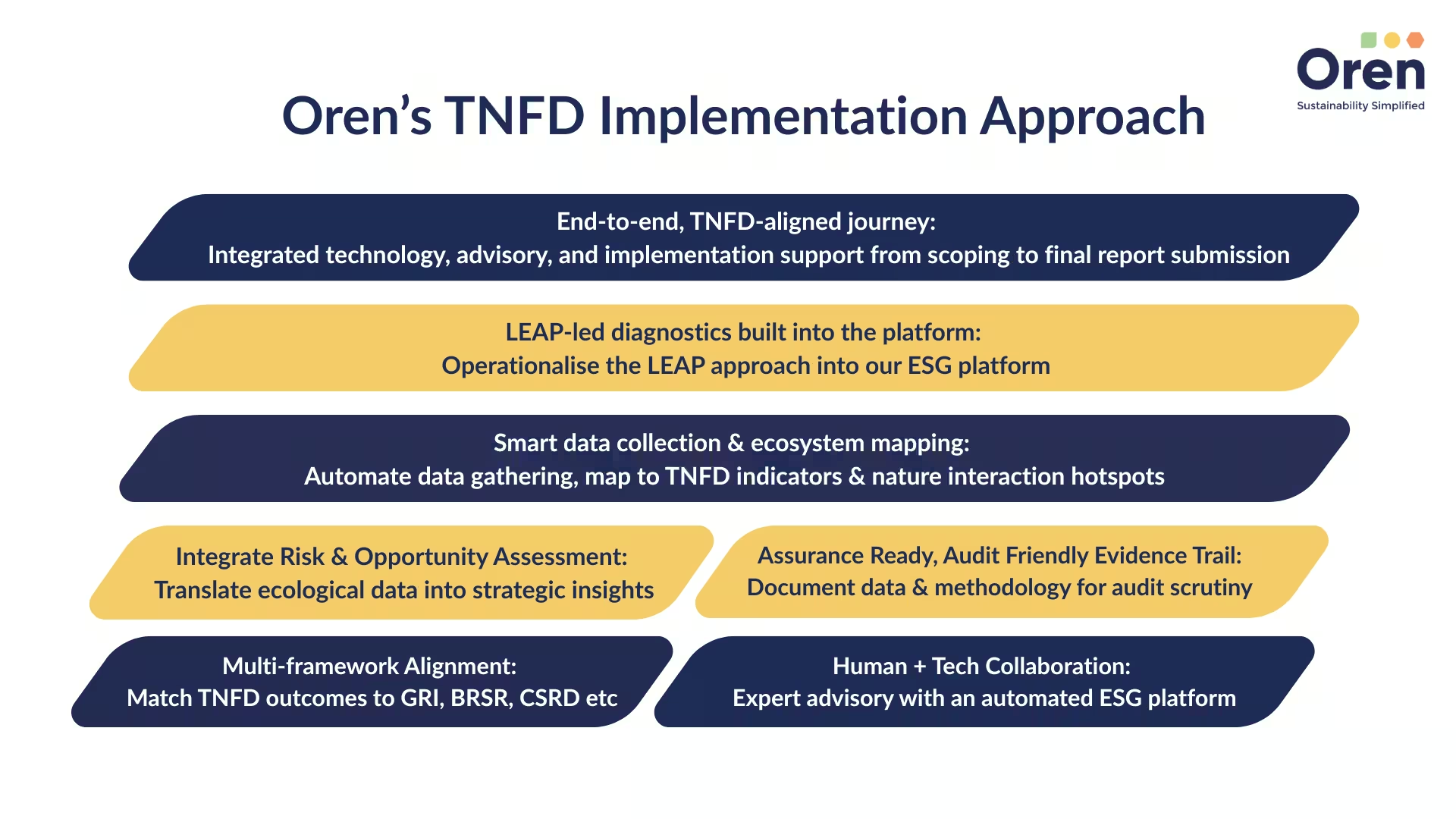
Oren embeds this LEAP workflow into its digital platform and TNFD services advisory so teams can follow it step by step.
| Stage | What It Does |
|---|---|
| Locate | Identify locations and value-chain interfaces with nature |
| Evaluate | Map dependencies & impacts to ecosystem assets and services |
| Assess | Prioritise material risks/opportunities and run scenario tests |
| Prepare | Integrate into strategy, set targets, and disclose findings |
TNFD and TCFD are similar in structure, based on governance, strategy, risk management, and metrics, but focus on different themes of the environment: nature vs climate.
| Feature | TNFD | TCFD |
|---|---|---|
| Primary Focus | Nature / biodiversity | Climate / GHG |
| Process | LEAP (location-based) | Climate scenario & risk pillars |
| Data Type | Ecological, spatial, and biodiversity | Emissions, energy, scenarios |
| Use Case | Nature risk & opportunity management | Climate risk / transition planning |
| Stakeholder Type | Why They Need It |
|---|---|
| Listed & large enterprises | Manage material nature-related risks |
| Banks & lenders | Assess borrower exposure and portfolio vulnerability |
| Investors & asset managers | Price nature risk in capital allocation |
| Insurers | Model underwriting and physical risks linked to nature loss |
| Multinationals with global supply chains | Understand upstream nature dependencies |
If your organisation falls into any of these groups, or you're simply unsure how exposed you are to nature-related risk, then connect with us.
Let our TNFD reporting services experts assess your organisation's nature dependencies and help you understand the risks and opportunities across your value chain.
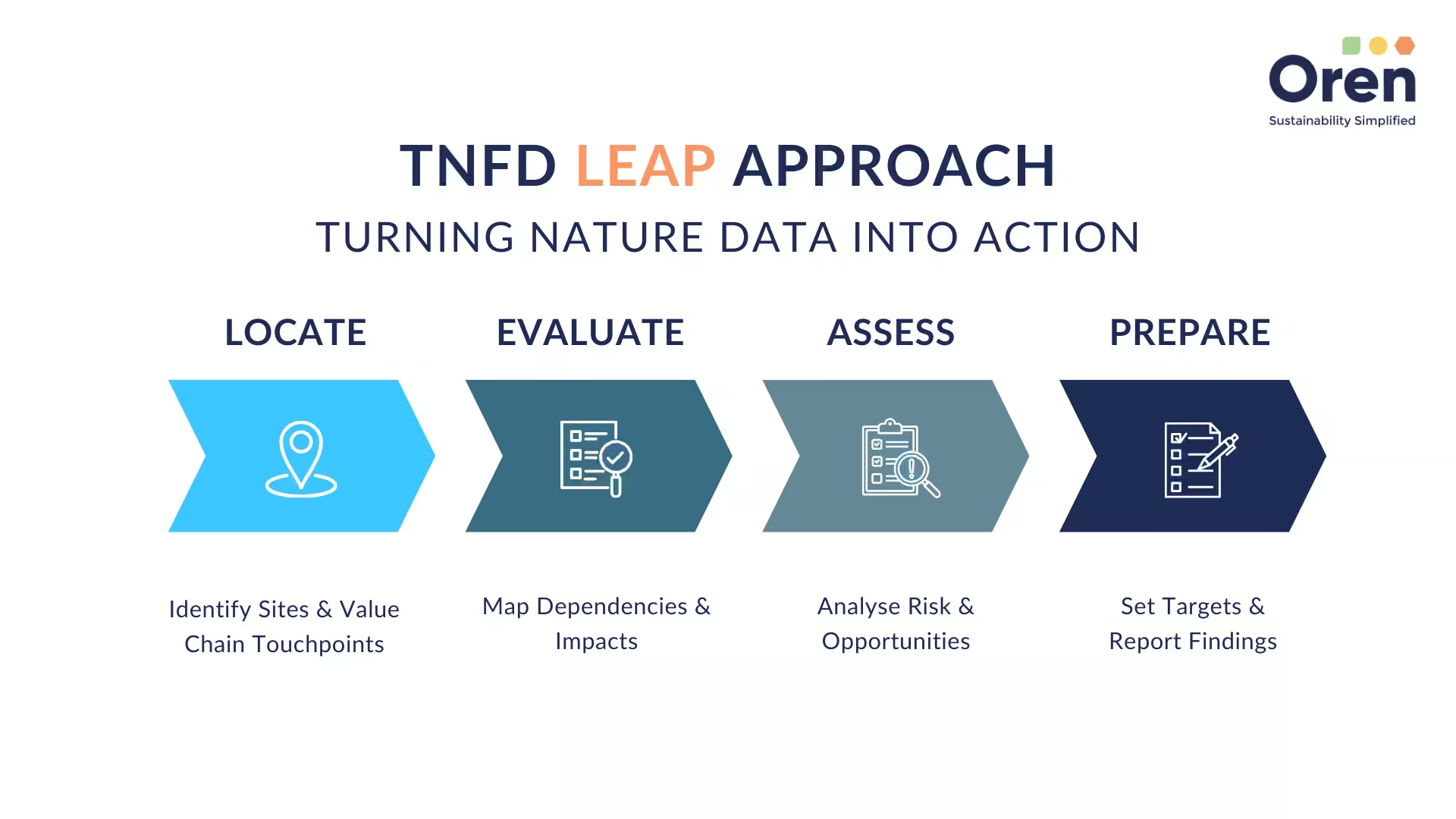
We implement TNFD in a phased, pragmatic way that balances technical rigour with your organisation's capacity, so you get a TNFD report that's both credible and usable.
A regional food and beverage company relies heavily on agricultural commodities from water-stressed regions. Using Oren, they mapped sourcing locations, did an overlay of water-risk data, and assessed drought and regulation in relation to crop availability, prices, and production costs.
This analysis led to diversified sourcing, as well as investing in water-efficient activities with major suppliers, and providing more vivid TNFD-aligned disclosures on nature dependencies and mitigation strategies.
Talk to an Oren expert to walk through our TNFD services, understand data requirements, and design a practical next step that fits your team.
The bottom line? Ignoring TNFD doesn't make nature-related risk disappear; it makes those risks opaque and likely costlier when they surface.

“Oren is very professional, and they deliver their services and commitments in a time-bound manner. The products they have developed are absolutely topnotch and it caters to all our requirements.”


“Oren's technology and expert advisory helped us overcome data management hurdles and navigate stakeholder engagement, materiality assessment and quantifying environmental impact to publish our first BRSR report.”


“Oren immensely helped us with our Scope 1 and Scope 2 reporting. Overall, the team is well updated and very supportive - and they were always just a call away. I definitely recommend Oren to anyone who is looking for assistance in their ESG journey.”


“Oren's expertise has been instrumental in driving our ESG achievements, consistently guiding us with professionalism, reliability, and timely execution. Their outstanding products not only surpassed expectations but also fully complied with Metrochem API Industries' ESG standards.”

“Oren is very professional, and they deliver their services and commitments in a time-bound manner. The products they have developed are absolutely topnotch and it caters to all our requirements.”
“Oren's technology and expert advisory helped us overcome data management hurdles and navigate stakeholder engagement, materiality assessment and quantifying environmental impact to publish our first BRSR report.”
“Oren immensely helped us with our Scope 1 and Scope 2 reporting. Overall, the team is well updated and very supportive - and they were always just a call away. I definitely recommend Oren to anyone who is looking for assistance in their ESG journey.”
“Oren's expertise has been instrumental in driving our ESG achievements, consistently guiding us with professionalism, reliability, and timely execution. Their outstanding products not only surpassed expectations but also fully complied with Metrochem API Industries' ESG standards.”
The Taskforce on Nature-related Financial Disclosures (TNFD) is a global, market-led initiative established to develop and deliver a risk management and disclosure framework for organizations to report and act on evolving nature-related risks and opportunities. It aims to support a shift in global financial flows toward nature-positive outcomes.
The TNFD was established in response to the growing recognition that natural loss poses significant risks to the global economy and financial system. By providing a standardized framework for nature-related financial disclosures, the TNFD seeks to enable organizations to incorporate nature into decision-making processes, thereby promoting sustainable development and investment practices.
The TNFD framework is modeled after the Task Force on Climate-related Financial Disclosures (TCFD) and aligns with its four foundational pillars: Governance: The organization's governance around nature-related risks and opportunities. Strategy: The actual and potential impacts of nature-related risks and opportunities on the organization's businesses, strategy, and financial planning. Risk & Impact Management: The processes used by the organization to identify, assess, and manage nature-related risks and impacts. Metrics & Targets: The metrics and targets used to assess and manage relevant nature-related risks and opportunities. This alignment facilitates integrated reporting on both climate and nature-related issues.
The TNFD framework is designed for use by corporates and financial institutions across various sectors. It provides guidance on assessing, managing, and disclosing nature-related dependencies, impacts, risks, and opportunities, enabling organizations to make informed decisions that consider their relationship with nature.
The TNFD framework adopts a flexible approach to materiality, allowing organizations to determine the significance of nature-related issues based on their specific context. It encourages organizations to consider both financial materiality (how nature-related issues affect the organization) and impact materiality (how the organization's activities impact nature), promoting a comprehensive understanding of nature-related risks and opportunities.
Organizations interested in adopting the TNFD framework can begin by: Joining the TNFD Forum to connect with peers and access resources. Exploring the TNFD Knowledge Hub for comprehensive guidance on implementing the framework. Utilizing the Learning Lab for self-guided learning on TNFD recommendations and best practices.
The LEAP Approach is a structured framework developed by the Taskforce on Nature-related Financial Disclosures (TNFD) to help organizations identify, assess, and manage nature-related risks and opportunities. It provides a step-by-step methodology for companies to integrate nature into business decision-making and financial disclosures. LEAP stands for: Locate: Identify where the organization interacts with nature across its value chain. Evaluate: Assess dependencies and impacts on nature. Assess: Determine material risks and opportunities related to nature. Prepare: Integrate findings into business strategy, risk management, and disclosures.
The LEAP Approach offers several advantages for organizations: Helps organizations understand their exposure to nature-related risks. Supports alignment with global sustainability frameworks like TCFD, CSRD, and SBTN. Guides businesses in making informed investment and operational decisions that consider biodiversity and ecosystem dependencies. Facilitates structured and transparent nature-related disclosures. The LEAP framework is voluntary but widely recommended for organizations aiming to integrate nature-related risks and opportunities into ESG strategies and corporate reporting.
How to Choose the Right ESG framework guide for businesses. Compare GRI, SASB, TCFD, & CDP to align reporting with industry standards & meet sustainability goals.

ESG reporting is a vital practice that allows companies to disclose their environmental, social, and governance (ESG) performance. This transparency is increasingly important for investors, regulators, and stakeholders. The environmental aspect focuses on reducing carbon footprints, social impact addresses labor practices and community engagement, while governance deals with leadership and corporate policies. ESG reporting is essential for building investor confidence, ensuring regulatory compliance, improving market positioning, and securing access to capital. However, challenges like knowledge gaps and diverse reporting standards remain. As ESG reporting trends toward becoming mandatory, businesses that adopt effective reporting practices will gain a strategic edge in sustainability and long-term growth.

Purchasing carbon credits is an essential strategy for businesses looking to offset their carbon footprint and contribute to global sustainability efforts. However, the process requires careful evaluation to ensure effectiveness, credibility, and alignment with corporate sustainability goals. This guide covers key considerations such as verification and certification standards, project types, geographic impact, risk factors, purchasing options, and regulatory frameworks. By following best practices and staying informed about evolving market trends, businesses can make responsible carbon credit investments that support meaningful climate action.

Explore environmental sustainability topics, benefits, definition, pillars, and initiatives that guide company action and drive improvement for companies and teams.