Scope 3 Emissions Data Collection: A Practical Guide for Companies

What Scope 3 Emissions Are and Why They Matter for Corporate Climate Reporting
When companies talk about carbon emissions, they often begin with the sources they control directly. This includes fuel used in company vehicles or electricity used in offices and factories. These are important, but they do not show the full climate impact of a business.
Many emissions actually happen outside a company’s own operations. And these are known as the scope 3 emissions. They come from activities connected to the company’s value chain rather than from the company itself. Scope 3 emissions cover 15 categories defined by the GHG Protocol, including upstream activities like purchased goods, capital goods, fuel- and energy-related activities, and business travel, as well as downstream activities such as product use, end-of-life treatment, and downstream transport. Organising emissions this way helps companies understand where the largest impacts occur.
Now, for many organisations, these indirect sources make up the largest share of their footprint. Because of this, companies now pay closer attention to scope 3 emissions data when reporting their overall climate impact.
Scope 3 Emissions Categories and Their Role in Value Chain Emissions
To measure scope 3 emissions, companies usually organise them into categories. These categories make it easier to understand where emissions happen across the value chain, from sourcing materials to the final use of a product.
In most cases, the emissions fall into two broad groups.
Upstream activities take place before products reach the company. This can include the production of purchased materials, transportation of raw materials, waste generated during supplier manufacturing, and energy used in supplier facilities.
Downstream activities occur after products leave the company. Examples include product distribution, the way customers use the product, servicing during its lifetime, and the disposal or recycling of products at the end of use.
Scope 3 Emissions Data and Its Importance in Sustainability Reporting
Reliable data on Scope 3 emissions is very important for any solid sustainability report. After all, this information follows the carbon footprint through the entire supply chain and a product's life. It shows a company exactly where its pollution comes from and which parts of the business are causing the most trouble.
Some of the clear benefits of keeping good data include:
Provides a complete picture of total emissions, including indirect sources
Identifies high-impact activities across the value chain
Supports regulatory and investor reporting requirements
Facilitates engagement with suppliers to reduce emissions collaboratively
Now, collecting this information is not always easy. Scope 3 emissions often come from suppliers, transport partners, and other external activities. And exactly because of this, many companies now use digital tools to organise the data and make reporting easier.
Scope 3 Data Collection Process for Organisations
Before estimating emissions, companies first need a clear scope 3 data collection process. This helps teams gather consistent information from different departments and suppliers.
A practical process usually includes:
Mapping the value chain: Identify where emissions may happen across activities such as purchasing, transport, product use, and disposal.
Working with suppliers: Ask vendors for details such as materials used, production volumes, or transport distances.
Coordinating internally: Teams like procurement, sustainability, and logistics often need to share data and work together.
Organising records: Store collected information in one system so it is easier to track and report later.
Checking the data: Review the information to make sure it is accurate before calculating emissions.
Basically, following a clear scope 3 data collection process and using recognised datasets or databases for emission factors ensures consistency when calculating Scope 3 emissions.

How to Calculate Scope 3 Emissions Using Activity Data and Emission Factors
Now, to calculate scope 3 emissions, companies combine activity data with emission factors. Activity data tells you what actually happened in the value chain, while emission factors estimate the greenhouse gases produced from that activity.
The calculation usually follows a simple approach:
Start with activity data: This could include the amount of materials purchased, transport distances, fuel used in logistics, or employee travel.
Use the relevant emission factor: Emission factors are standard values that convert an activity into an emissions estimate. These are often taken from recognised datasets or a scope 3 emission factor database.
Apply the calculation: Activity data × emission factor = estimated emissions. For example, transport distance multiplied by a transport emission factor gives an estimate of emissions from shipping.
Moreover, by applying this method across different activities in the value chain, companies can estimate their overall scope 3 emissions more systematically.
Scope 3 Emissions Examples Across Different Industries
Scope 3 emissions do not come from a company’s own operations. They usually appear somewhere in the value chain, which means the sources can look different from one industry to another.
For instance:
In manufacturing, emissions often come from the production of raw materials, supplier manufacturing activities, and the transport of components to factories.
Retail and consumer goods companies see emissions from supplier production, packaging materials, and distribution networks that move products to stores.
In the technology sector, common sources include the manufacturing of hardware components, outsourced production partners, and employee travel.
For food and agriculture businesses, emissions are often linked to farming activities, food processing, and refrigerated transport used in cold-chain logistics.
These examples show how scope 3 emissions can appear at many stages before a product reaches the final customer.
Key Takeaways on Managing Scope 3 Emissions Data Effectively
Managing scope 3 emissions takes coordination across teams and suppliers. Most of the data comes from outside the company, so having a clear way to collect and review it is important.
A few things usually help organisations manage this better:
Start by mapping the value chain and identifying where emissions are likely to happen.
Build a simple system to collect and organise emissions data.
Work closely with suppliers since much of the information comes from them.
Review the data regularly so reporting stays accurate over time.
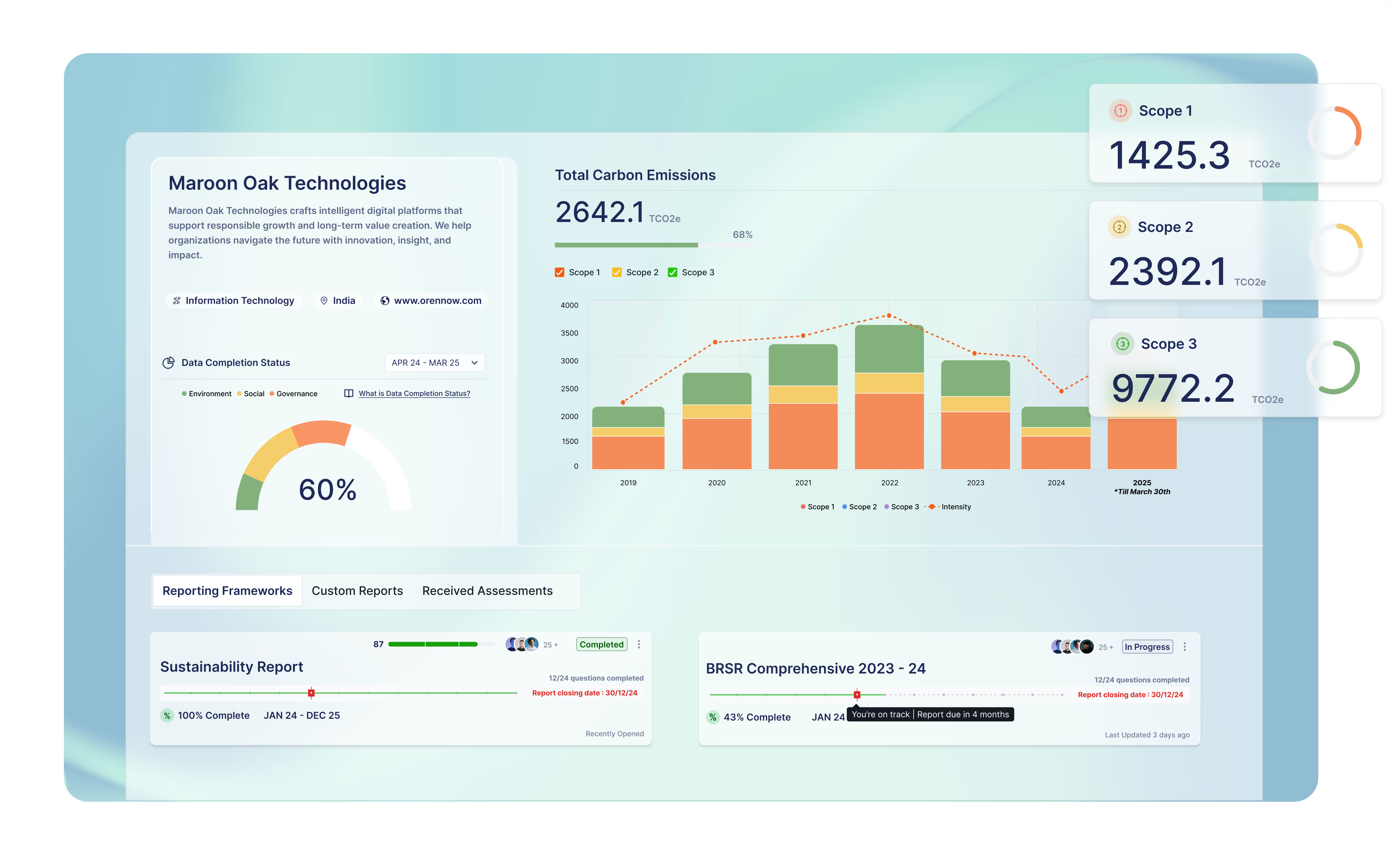
As companies deal with larger datasets, keeping everything organised becomes harder. Tools such as Oren help bring sustainability information into one place, making emissions tracking and reporting easier to manage.
Frequently Asked Questions (FAQs)
Q1. What are scope 3 emissions?
Q2. Why are scope 3 emissions important for companies?
Q3. How do companies calculate scope 3 emissions?
Q4. What are the categories of scope 3 emissions?
Q5. What is scope 3 emissions data?
Q6. What is the scope 3 data collection process?
Q7. What are common examples of scope 3 emissions?

About the author
Abhirup Das
Head of ESG & Sustainability Advisory
Abhirup leads Oren’s ESG & Sustainability Advisory practice, blending industrial engineering, digital transformation, and ESG governance to translate compliance into long-term financial and strategic value.