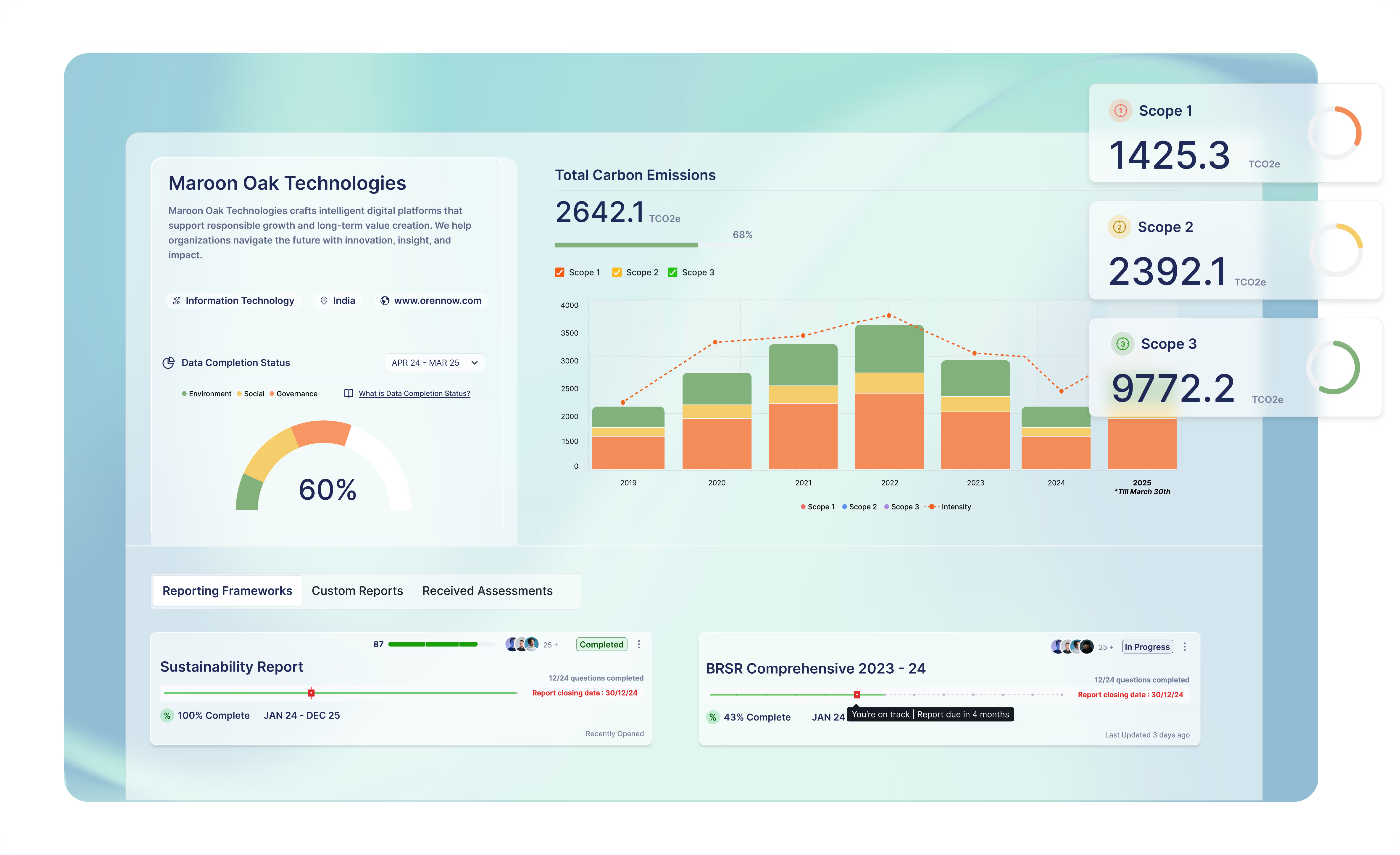
ESG Compliance Checklist in India : Requirements for Listed & Unlisted Companies

ESG Compliance in India and Why It Is Important for Companies
ESG compliance is no longer something companies in India deal with only at the time of reporting. It is increasingly embedded in business operations, influencing decisions around risk, operations, and long-term planning.
In simple terms, ESG compliance is about how a company tracks and shares details of its environmental, social, and governance practices. It gives a clearer picture of how the business actually works and how it manages its responsibilities in day-to-day operations.
There are a few reasons why this shift is becoming more noticeable now:
Reporting formats like BRSR now call for more detailed and structured disclosures.
Investors are paying attention to sustainability, not just financial performance.
Global clients expect better visibility across supply chains before partnerships.
Companies are expected to track indirect emissions across the 15 categories of Scope 3 emissions defined by the GHG Protocol.
The 15 categories of Scope 3 emissions are defined by the GHG Protocol to cover a company’s indirect emissions across the value chain. They include upstream activities such as purchased goods and services, capital goods, fuel- and energy-related activities, and business travel, as well as downstream activities like use of sold products, end-of-life treatment of sold products, and downstream transportation and distribution. This categorisation helps companies track and report emissions comprehensively and consistently.
When these expectations are understood early, companies are usually better prepared and can avoid last-minute reporting gaps. To take this further, it helps to look at the requirements, standards, and practical steps involved.
Overview of ESG Compliance Requirements for Listed and Unlisted Companies
ESG expectations in India do not apply in the same way to every business. They largely vary depending on whether a company is listed or privately owned, although the general direction is clearly moving towards more transparency and clearer disclosures over time.
ESG Requirements for Listed Companies Under SEBI Regulations
Certain listed companies are required to report ESG details under BRSR.
Disclosures usually include governance practices, emissions data, and social indicators.
Value chain emissions are expected to be part of the overall reporting.
There is a strong focus on keeping data accurate and consistent.
ESG Requirements for Unlisted and Private Companies in India
In most cases, there is no strict regulatory requirement.
ESG efforts are often influenced by investors, lenders, or client expectations.
Many companies choose to start early to stay prepared.
Gradual alignment with global ESG frameworks is becoming more common.
Key Differences in ESG Compliance for Listed vs Unlisted Companies
Aspect | Listed Companies | Unlisted Companies |
Requirement | Mandatory (BRSR) | Largely voluntary |
Reporting Depth | Detailed and structured | Limited or evolving |
Regulatory Scrutiny | High | Lower |
Key ESG Reporting Standards in India, Including Scope 3 Emissions and GHG Protocol
Companies in India tend to follow a mix of local requirements and global frameworks to keep their ESG reporting consistent.
BRSR serves as the primary framework that companies rely on for organising and presenting their ESG disclosures in a structured way.
The scope 3 GHG protocol, along with the GHG protocol scope 3 categories, helps businesses track and understand their indirect emissions more clearly.
Reporting today also includes areas like Scope 3 purchased goods and services, and Scope 3 waste generated in operations, which are often significant contributors.
Scope 3 purchased goods and services - Category 1
Scope 3 waste generated in operations - Category 5
Furthermore, the difference between upstream vs downstream emissions is fairly straightforward. Upstream relates to sourcing and supplier activities, while downstream focuses on how products are used and handled after sale.
Using these frameworks makes it easier to map each Scope 3 emissions category properly and keep the data usable and consistent.
ESG Compliance Checklist for Companies Including Scope 3 Emissions Categories
Once the frameworks are understood, the focus usually shifts to putting them into action. A simple checklist makes this easier to handle, especially since ESG data often comes from different teams and outside partners.
(I) Environmental
Track Scope 1, Scope 2, and the 15 categories of Scope 3 emissions.
Include emissions linked to suppliers, logistics, and distribution.
Monitor energy usage, waste output, and water consumption regularly.
(II) Social
Maintain employee health and safety standards.
Build policies around inclusion and fair treatment.
Stay connected with stakeholders such as employees and communities.
(III) Governance
Clearly define board responsibilities and ethical practices.
Put systems in place to manage risks and ensure accountability.
Keep ESG disclosures accurate and updated.
As companies begin covering all 15 categories of Scope 3 emissions, the reporting process becomes easier to organise and maintain.
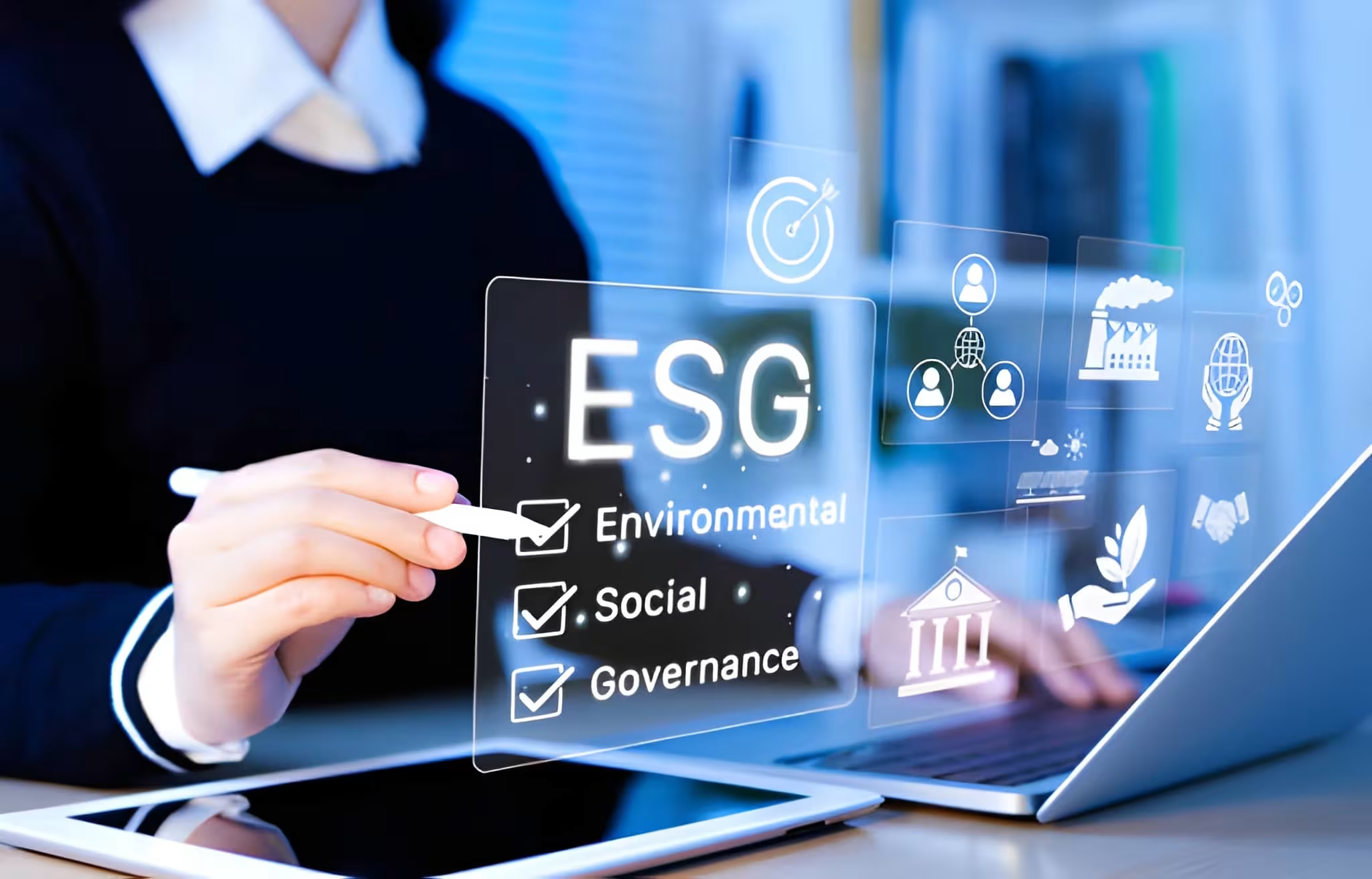
ESG Gap Analysis Checklist for Identifying Compliance Gaps
Now, before making any improvements, companies need a clear sense of where they currently stand. Gap analysis helps with that.
Instead of treating it as a one-time task, it works better as a regular review:
Go through existing ESG reports, disclosures, and internal data.
Compare current practices with BRSR and other frameworks.
Identify missing data across each Scope 3 emissions category.
Verify that relevant upstream (Categories 1–12) and downstream (Categories 13–15) emissions are addressed where applicable.
Look at how reliable the available data actually is.
Prioritise gaps based on risk and business impact.
A useful gap analysis does not just point out what is missing. It also helps teams decide what to fix first without making the process unnecessarily complicated.
Common Challenges in Meeting ESG Reporting Requirements
Even with clear guidance, ESG reporting often runs into practical issues once companies start working with real data and multiple stakeholders.
Supplier data across Scope 3 emissions categories is often patchy or inconsistent, especially with large vendor networks.
Applying the Scope 3 framework in day-to-day operations can feel unclear despite defined categories.
Limited visibility across the value chain makes it harder to track upstream and downstream emissions properly.
Internal constraints like smaller teams, basic tools, or tight budgets can slow progress and affect reporting quality.
And it is because of these gaps that companies often need a more structured approach to improve how ESG data is tracked, managed, and reported.
Best Practices to Improve ESG Compliance and Scope 3 Emissions Reporting
Improving ESG reporting usually comes down to having the right approach and systems in place.
Use GHG Protocol Scope 3 categories as a base for tracking emissions.
Build internal processes to manage ESG data consistently.
Work with suppliers to improve data availability.
Use automation tools wherever feasible to minimise manual work.
Review ESG data regularly through audits.
In some cases, organisations also rely on dedicated ESG platforms like Oren to streamline data collection and reporting. In fact, this is especially helpful when dealing with large volumes of supplier and emissions data.
Key Takeaways on ESG Compliance for Indian Companies
ESG compliance in India is slowly but steadily moving beyond just regulatory requirements and becoming part of how businesses build trust and long-term value.
Some key points to remember:
ESG is becoming relevant across industries.
The 15 categories of Scope 3 emissions are now a key part of reporting.
Listed companies face stricter disclosure expectations.
Gap analysis helps prevent reporting issues later.
Consistent ESG practices support investor confidence.
Starting early and keeping the process structured makes ESG compliance much easier to handle over time
Frequently Asked Questions (FAQs)
Q1. What is ESG compliance?
It refers to how companies track and report their environmental, social, and governance performance.
Q2. What are ESG compliance requirements in India?
Listed companies follow BRSR, while others adopt ESG practices based on stakeholder expectations.
Q3. What is an ESG checklist for companies?
It is a structured approach that helps companies manage and report ESG data properly.
Q4. How do companies perform an ESG gap analysis?
Companies can perform the analysis by comparing existing data with the required standards and identifying missing areas.
Q5. What are the main ESG reporting standards used by companies?
BRSR and frameworks like the GHG Protocol.
Q6. Are ESG reporting requirements mandatory for all companies?
They are mainly mandatory for listed companies, while others follow them voluntarily.
Q7. How can organisations improve their ESG compliance processes?
They can do so by improving data systems, aligning with frameworks, and tracking emissions across the value chain.

About the author
Olivia Paul
ESG & Sustainability Advisor
Olivia is an ESG & Sustainability Advisor at Oren, focused on ESG reporting and strategy, materiality assessments, GHG inventory, and net-zero roadmaps across manufacturing, financial services, and infrastructure.