Government of India's Response to CBAM: A Strategic Overview

Understanding CBAM and Its Implications for India
The European Union's (EU) Carbon Border Adjustment Mechanism (CBAM) is a significant regulatory development designed to tackle carbon leakage and promote environmentally responsible production. By imposing a carbon cost on specific imported goods, CBAM aims to create a level playing field for EU producers who comply with stringent environmental regulations. For countries like India, which have substantial exports to the EU, CBAM's impact is profound.
Key Implications for India
- Increased Production Costs: Indian exporters may face higher costs due to the need to calculate and report carbon emissions, invest in cleaner technologies, and purchase CBAM certificates. This could squeeze profit margins and affect the competitiveness of Indian goods in the EU market.
- Shifting Market Dynamics: EU buyers might prefer sourcing from regions with more stringent environmental regulations. Indian exporters may need to diversify their markets or enhance their sustainability credentials to maintain their market share.
- Potential Loss of Competitiveness: EU-produced goods with lower carbon footprints will likely be more competitively priced. Indian exporters will need to improve their carbon footprint or adjust pricing strategies to remain competitive.

The Government of India's Response: A Multi-Faceted Approach
In response to CBAM, the Indian government has adopted a multi-pronged strategy to mitigate challenges and leverage opportunities. Here’s a closer look:
- Engaging with the EU: The Indian government has been proactive in engaging with the EU Commission to discuss CBAM's potential impact on Indian exports. The focus is on ensuring a fair and transparent implementation process that accommodates India’s developmental needs.
- Exploring Legal Options: India is exploring the possibility of challenging CBAM at the World Trade Organization (WTO) if the mechanism is found to be discriminatory or protectionist. This could involve questioning CBAM's alignment with WTO principles of free and fair trade.
- Promoting Domestic Carbon Pricing Mechanisms: The Indian government is considering implementing a domestic carbon tax or emissions trading scheme. Such mechanisms could incentivize cleaner production practices and potentially provide a benchmark for CBAM liability. By adopting domestic carbon pricing, Indian exporters could enhance their competitiveness.
- Fostering Innovation and Green Technologies: Investing in clean technologies and research & development (R&D) is crucial for reducing the carbon footprint of Indian industries. Initiatives such as Production Linked Incentives (PLIs) for green sectors and support for renewable energy adoption are part of this effort.
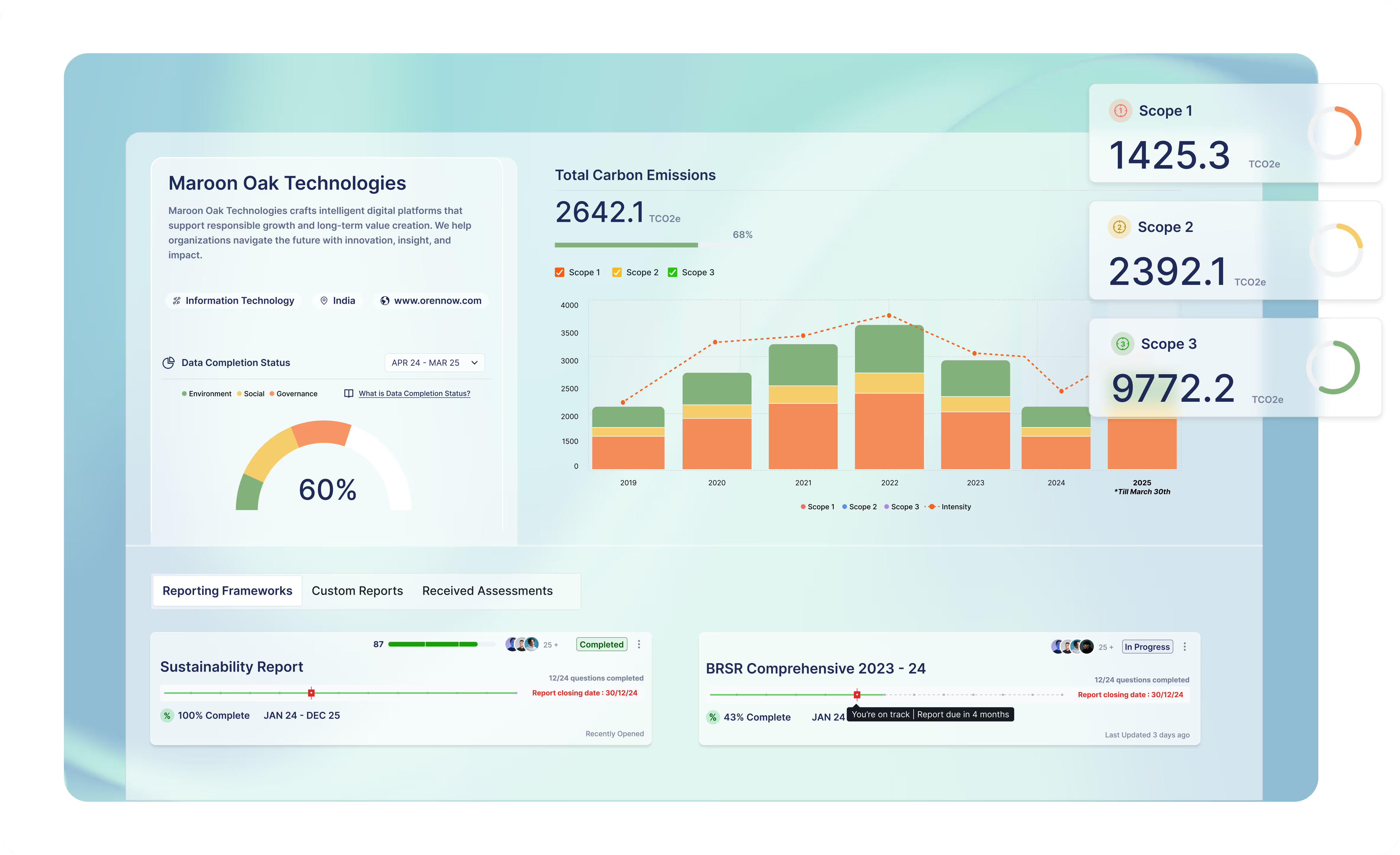
- Focus on Sustainability Reporting and Transparency: The government is emphasizing the importance of robust sustainability reporting by Indian companies. This includes mandating standardized reporting frameworks and encouraging third-party verification of sustainability data. Transparent practices can build trust with EU buyers and demonstrate India's commitment to environmental responsibility.

Challenges and Opportunities: The Road Ahead
The Government of India's response to CBAM reflects a balancing act between protecting Indian exporters and fostering sustainable practices. Here are the key challenges and opportunities:
Challenges
- Legal Complexities: Navigating the legal aspects of CBAM implementation and potential WTO disputes can be time-consuming and complex.
- Investment Requirements: Achieving significant reductions in carbon emissions requires substantial investments and technological advancements, which may be challenging for some sectors.
Opportunities
- Catalyst for Sustainability: CBAM can drive India’s transition towards a more sustainable and low-carbon economy. By embracing clean technologies and innovation, Indian industries can enhance their global competitiveness and contribute to a greener future.
- Enhanced Transparency: Focusing on transparency and robust sustainability reporting can improve India’s image as a responsible trading partner and support ESG (Environmental, Social, and Governance) goals.
Conclusion
The Indian government's strategic response to the Carbon Border Adjustment Mechanism (CBAM) highlights a comprehensive approach to addressing the regulatory challenges while seizing opportunities for sustainability. By engaging with the EU, exploring legal avenues, promoting domestic carbon pricing, and investing in green technologies, India aims to navigate the complexities of CBAM and enhance its position in the global market. Embracing transparency and sustainability reporting further strengthens India's commitment to environmental responsibility and global competitiveness.

About the author
Kushagra
Senior ESG & Sustainability Advisor
Kushagra is a Senior ESG & Sustainability Advisor at Oren with 8+ years across CSR and sustainability consulting, specialising in GHG accounting, ESG strategy, and regulatory reporting across India, the UAE, and the Middle East.