ESG In Pharma: Why It Matters for Sustainable Business Growth

Pharma companies sit right at the spot where public health, environmental impact, and global trade all intersect. Dealing with pharmaceutical ESG issues is now both a legal necessity and a way to gain a competitive advantage. Investors are scrutinising drug pricing and chemical waste because they consider these factors to determine if a company is going to last in the long term.
What Is ESG And Why Is It Relevant To Businesses?
At its core, ESG (Environmental, Social, and Governance) is a framework for evaluating a company’s conscience and impact. With climate change being a massive threat, these initiatives are used to cut down environmental footprints and maintain business integrity. Pressure from employees, customers, and suppliers is expected to intensify as the years go on.
Because the pharmaceutical industry is responsible for human lives, the bar for accountability is higher than in almost any other sector. There is intense regulatory pressure here. Prioritising pharma sustainability is a necessary strategic shift that businesses have to make to have the right impact. Most organisations rely on dedicated internal teams and committees to turn these sustainability goals into daily practice. Falling short of these benchmarks brings more than just a fine; it puts a company’s reputation at stake and risks being shut out of major global trade networks.
The Pharmaceutical Industry And Its Impact On Society And The Environment
For decades, pharmaceutical companies have been relentlessly working for mankind. They play a crucial role and their contribution to the well-being of society has been immense. In addition to producing large quantities of basic medicines, they have the capability and potential to research, innovate and manufacture treatments and therapeutics for life-threatening and/or rare diseases and chronic conditions. The pharmaceutical industry has greatly contributed to the increase in life expectancy for men and women across the world.
Medicines are a simple, quick, and often cost-effective solution to many health problems. They challenge life-threatening diseases and also largely reduce human suffering by managing pain, symptoms, or side effects of treatments, helping to relieve discomfort. With the ever-improving and revolutionary pharmaceutical industry as the backbone, the world has fought so many health crises throughout history. Fighting off the COVID pandemic has been possible due to the swift actions and efforts of the pharma industry.
However, this industry poses a threat to the environment with its energy-intensive operations and not-so-pleasant practices. Not only that, improper waste disposal and high GHG emissions also contribute to negative environmental impacts. Pharmaceutical production processes release various chemicals and by-products into the environment. One of those is discharging antibiotics into the environment which can promote antibiotic resistance in people. People living in areas near manufacturing facilities are vulnerable to pharmaceutical pollution as their water sources are subject to getting contaminated with chemical waste produced by the industry in question.
Importance of ESG in the pharmaceutical industry
Real-world importance for ESG and sustainability in the pharmaceutical industry is coming from new rules like India’s BRSR and Europe’s CSRD, which have made transparency a requirement rather than a choice. Risk management now involves looking at ESG scores to see who can handle supply chain disruptions or pricing controversies. For an industry that depends fundamentally on trust, this framework is how a firm demonstrates ethical resilience, trust, and long-term sustainability.
Key ESG Goals Relevant to the Pharmaceutical Industry
Addressing the multifaceted impact of pharma requires a structured approach across environmental and social pillars. Below are the six primary goals for the sector:
ESG Goal 1: Focus on energy efficiency
The pharmaceutical industry uses a considerable amount of energy in its operations. Monitoring and analysing energy consumption is of utmost importance. Being energy efficient not only helps reduce operational costs but also to become a little gentler towards the environment and minimises the harsh impact the business might cause to it. Innovative and energy-efficient technologies and practices can be strategically put to use to reduce energy wastage and the cost of production and operations.
ESG Goal 2: Reduce emissions and Carbon footprint
Pharmaceutical processes, end products, and supply chains need to be closely monitored for any inadequacies that might be responsible for a direct or indirect impact on the environment. Few medicines and medical devices have an especially high environmental impact. For instance, even today, inhalers for lung conditions still contain hydrofluorocarbons, which are potent greenhouse gases.
Scope 3 emissions are where the greatest challenges lie because they usually make up the biggest part of the carbon footprint. These come from outside sources like third-party API manufacturing or how patients dispose of their medicine after use. Global distribution networks add to this challenge too.
ESG Goal 3: Waste generation and disposal
This industry is known to generate a large amount of waste, chemicals, and plastic. Plastic waste can be thought to be recycled, but often a large portion of it ends up in dumping sites due to challenges in waste segregation and sorting. Though recycling is a great solution to this problem, it involves dedicated and collaborative efforts from the medical sector and waste management authorities. Plastics used in the medical sector can be designed to be recycling-friendly. Although plastic is an indispensable part of the medical industry, research and innovation can help find better and more practical alternatives.
Chemical waste is also a prominent contributor to environmental damage. Its disposal is an eminent aspect while considering proper waste management. Chemical waste tends to contaminate food and water sources, affecting both humans & animals. Optimised disposal of waste is a vital step toward achieving long-term pharmaceutical sustainability.
ESG Goal 4: Manufacturing, Distribution, and Transportation
Using eco-friendly methods for manufacturing, distribution, and transportation can help reduce carbon emissions to a great extent. Going green and using cleaner fuels to power the production facilities, for example, powering the facility with solar energy, can not only reduce costs but also increase efficiency. Simultaneously, opting for sustainable methods to package and distribute the end products can help. For example, a reduction in single-use plastic packaging and an increased use of eco-friendly and recycled materials. Likewise, for distribution and transport, sustainable options can be considered. The struggle with cold-chain logistics, to keep vaccines cold during transport, is a significant part of the industry's environmental footprint, too. Because temperature-sensitive medicines need constant high-energy refrigeration, optimising these logistics is the only way to meet carbon-reduction targets.
ESG Goal 5: Social responsibility
a. Price gouging
Drug pricing has been of concern for a few years. It has been seen that a few drugs have been priced high out of greed and competition in the market. Price gouging affects everyone, especially patients who can barely afford medicines on a routine. This practice needs to be curbed. Pharmaceutical companies can play their part by being ethical and fair and giving back to the community.
b. Access to medication in poor and underdeveloped countries
Poor countries suffer from a lack of food, let alone the affordability of medicines and medical treatments. Pharma companies can do their bit for society and people by making medicines available on a non-profit basis in countries where affordability is a question. This enables healthcare to be revolutionised for everyone, regardless of economic status.
c. Well-being of employees
It's the responsibility of the company to ensure the well-being of its people at work. Regardless of employees at facilities, production sites, or corporate offices, each one of them deserves good working conditions. Employee satisfaction is a must, and a healthy and safe environment must be maintained. Diversion and inclusion in the workplace are some key aspects that can be taken care of.
d. Invest in healthcare awareness programmes and projects
Pharmaceutical companies can initiate and join health awareness programmes. It is important to educate society about the importance of health and hygiene. Menstrual hygiene, early detection of ailments, washing of hands, the importance of immunisation, and the importance of good nutrition can be some of the focus areas.
ESG Goal 6: Governance
Governance is the anchor for clinical and commercial integrity. Anti-corruption policies have to be strict to stop market access bribery. On the clinical side, leaders have to mandate trial data integrity so research stays transparent. Boards can take the lead by tying executive compensation directly to whether or not the company achieves its sustainability targets.
Real progress usually starts from within the company itself through the policies that guide daily life. When a firm makes a genuine effort to address workplace inequality and ensures that its everyday decisions are fair, it builds a level of public trust that goes far beyond simple compliance. This culture of integrity helps keep the business secure by making ethical behaviour a natural priority for everyone involved. It also encourages leaders to identify potential issues like tax errors or misconduct early on, which helps them avoid the long and expensive legal battles that often follow.
Benefits of ESG for Pharma Companies
A solid approach to these issues also brings significant financial and operational advantages that help a business thrive. A proven record of responsible behaviour is a major draw for investors and makes it much easier for a company to get the funding it needs to innovate. On top of that, adopting greener habits allows a firm to run more efficiently by cutting back on chemical waste and lowering utility costs. These changes can increase overall profits while allowing a company to maintain its high ethical standards throughout its journey. Eventually, these practices help build a supply chain that is resilient enough to withstand severe weather or sudden changes in government regulations.
ESG Ratings and Reporting Standards Relevant to Pharma
Companies use specific frameworks to prove they are actually meeting the necessary ESG standards.
Framework | Coverage for Pharma |
BRSR (Business Responsibility & Sustainability Reporting) | Mandatory for the top 1,000 listed Indian companies. Based on 9 principles of responsible conduct. |
GRI (Global Reporting Initiative) 200, 300, 400 | A worldwide standard for reporting a company's impact on the economy (200), environment (300), and society (400). |
EcoVadis | An essential supply chain rating that checks for labour rights and ethical buying habits. |
CDP (Carbon Disclosure Project) | A system for being open about carbon emissions and potential water security risks. |
How Oren Can Help Pharma Companies
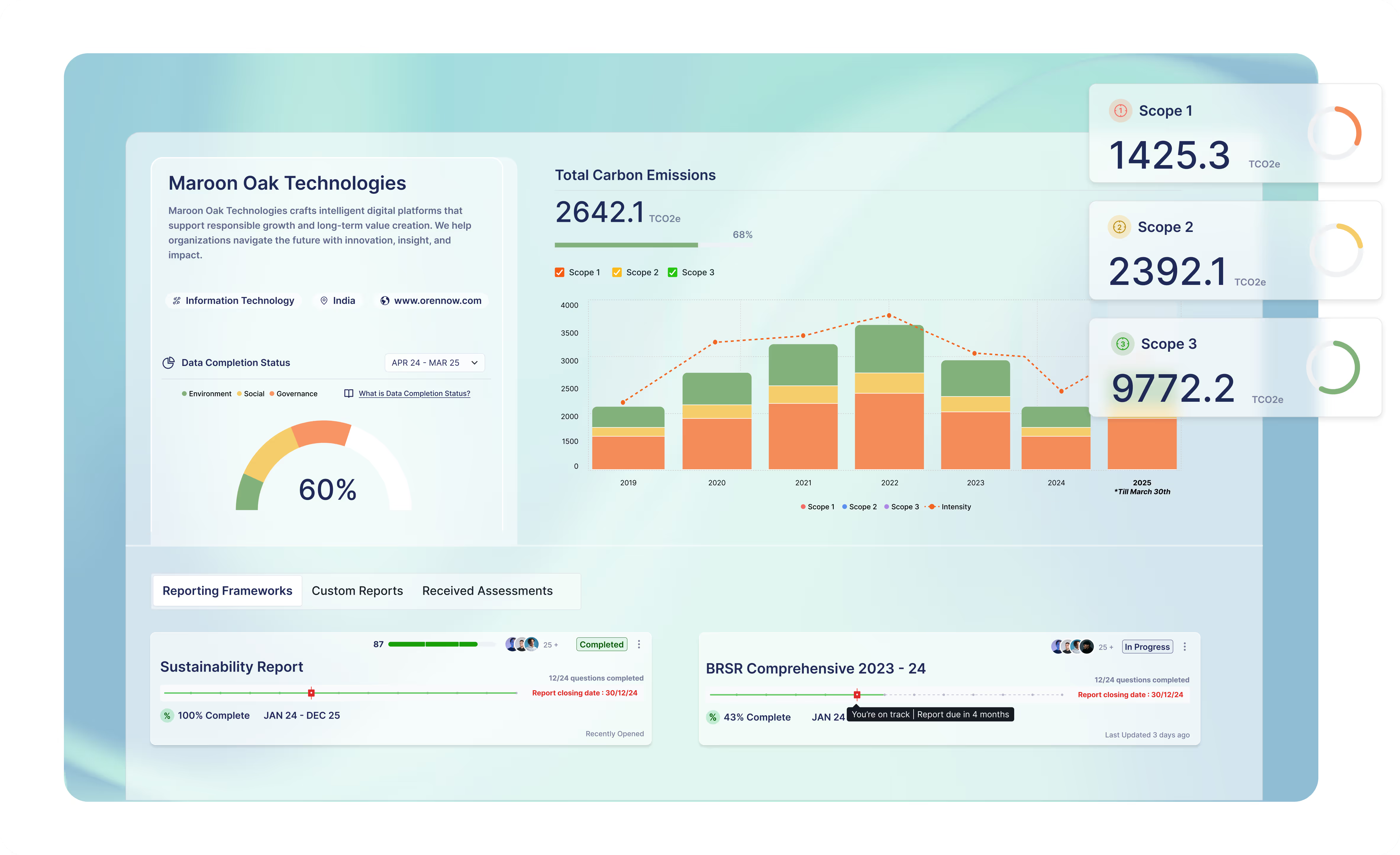
Managing all the data regarding ESG compliance is complex. Trying to track emissions from a supplier while maintaining compliance with BRSR rules takes a lot of effort. Oren works as an ESG partner by providing a digital platform that makes data collection simple. Receive guidance in automating reporting and find where operations can be more efficient. These insights help businesses move beyond mere compliance to lead in the healthcare market.
Ready to transform your ESG strategy? [Schedule a demo with Oren today] and lead the future of sustainable healthcare.
Key Takeaways
Today, winning in the pharma market is directly linked to how well a firm honours its environmental and ethical promises. When ESG is built into the core strategy, pharma companies can safeguard public health, protect the planet, and ensure long-term profitability. Ultimately, a commitment to ESG is a commitment to the very patients and communities the industry serves.
Frequently Asked Questions (FAQs)
Q1. Why is ESG important for pharmaceutical companies specifically?
Because the industry deals with both life-saving science and potentially hazardous chemicals, the stakes for ESG in pharma are incredibly high.
Q2. What are the key ESG challenges for the pharma industry?
The most pressing hurdles for ESG in pharma involve reducing lab energy use, tackling plastic waste, and balancing drug affordability with honest clinical research.
Q3. Which ESG reporting frameworks apply to pharma companies in India?
The main one is BRSR. SEBI requires the top 1,000 listed companies to use this format.
Q4. How do ESG ratings like EcoVadis affect pharma supply chains?
Global pharma leaders often won't sign contracts with suppliers who have low scores. A low score can effectively close doors, leading to missed opportunities for major contracts.
Q5. What are Scope 3 emissions in pharma, and why do they matter?
These are indirect emissions. In pharma, they mostly come from making active ingredients at other sites or from patients using the products. In the pharma world, these indirect activities often make up more than 70% of a firm's entire carbon footprint.
Q6. How does drug pricing relate to ESG social goals?
The social part of ESG in pharma focuses on access to medicine. Ethical pricing ensures that treatments reach people who need them in underserved areas
Q7. What is BRSR, and which pharma companies need to comply?
BRSR is SEBI’s mandatory sustainability reporting format. Currently, the top 1000 listed pharma companies in India must comply, with more expected to follow.
Q8. How can pharma companies reduce their environmental impact?
They can do so by transitioning to renewable energy for production, optimising wastewater treatment to prevent antibiotic runoff, and using eco-friendly packaging.
Q9. What role does governance play in pharma ESG strategy?
Governance ensures transparency in clinical trials and prevents bribery in sales. By tying executive bonuses to sustainability milestones, boards can prevent corruption and make sure the company stays on track with its environmental and social goals.
Q10. How does ESG performance affect investor decisions in the pharma sector?
A high score for ESG in pharma is a clear signal to investors that a business is stable and responsible. This often leads to a higher market value and better terms for raising money compared to competitors who overlook sustainability.

About the author
Kushagra
Senior ESG & Sustainability Advisor
Kushagra is a Senior ESG & Sustainability Advisor at Oren with 8+ years across CSR and sustainability consulting, specialising in GHG accounting, ESG strategy, and regulatory reporting across India, the UAE, and the Middle East.