Carbon Offsetting vs Insetting: Differences, Strategies, and ESG Impact for Indian Companies

Pick almost any board climate review at an Indian listed entity, and one question keeps coming back: where does carbon offsetting end and insetting begin, and which one earns the disclosure trust? Short version: carbon offsetting compensates for emissions by funding projects outside your value chain; carbon insetting cuts emissions inside it. The carbon offsetting vs insetting choice is no longer theoretical. With India's Carbon Credit Trading Scheme (CCTS) live since January 2025 and BRSR Core demanding sharper Scope 3 disclosure, you need to know which lever you're pulling.
What Carbon Offsetting and Carbon Insetting Mean
Carbon offsetting, on the other hand, is a term for a situation where an individual's or a company's carbon footprint is counteracted by investing in external projects that have the capacity to reduce, prevent, or compensate for an equal quantity of greenhouse gases. One carbon credit in this scenario is equivalent to a reduction of one tonne of CO2. Some examples of such projects include afforestation, renewable energy development, methane recovery from landfills, and efficient cookstoves.
On the other hand, carbon insetting involves investing within one's value chain to minimize their carbon footprint. In this case, examples of carbon insetting may include regenerative farming in partnership with supplier farmers, use of renewable energy in factory facilities, reforestation associated with procurement activities, and low-carbon logistics material.
Carbon Offsetting vs Insetting: The Core Differences
The carbon offsetting vs insetting split is best seen across five attributes. A quick comparison:
Attribute | Carbon Offsetting | Carbon Insetting |
Location of project | Outside your value chain | Inside your value chain |
Emissions scope affected | Compensation only | Scope 1, 2, and 3 reductions |
Inventory impact | None (claim only) | Lowers reported emissions |
Speed to deploy | Days to weeks | Months to years |
SBTi treatment | Limited recognition | Direct reduction credit |
One more thing. Carbon offsets are tradeable; carbon insets typically are not. Insetting work usually stays inside contractual relationships with your suppliers.
How Carbon Offsetting Works in India: CCTS and Voluntary Markets
India's carbon offset market now has two clear tracks. The Carbon Credit Trading Scheme (CCTS), administered by the Bureau of Energy Efficiency (BEE) under the Ministry of Power, runs the compliance side for 461 obligated entities across 9 energy-intensive sectors: aluminium, chloralkali, cement, fertiliser, iron and steel, pulp and paper, petrochemicals, petroleum refining, and textiles.
Alongside compliance, BEE released the Offset Mechanism Version 1 procedure in March 2025. Eight methodologies are approved: renewable energy (including hydro and pumped storage), green hydrogen, industrial energy efficiency, landfill methane recovery, mangrove afforestation, RE with storage, offshore wind, and compressed biogas. Non-obligated entities can register projects, earn CCCs, and trade on IEX and PXIL. The global voluntary market (Verra, Gold Standard) remains a parallel option for Indian companies, with rising scrutiny on quality.
How Carbon Insetting Works: Reducing Emissions Inside Your Value Chain
Insetting carbon begins with just one simple step: Identify which suppliers or activities within your business value chain emit the highest amount of greenhouse gases, and what is needed to get those emissions numbers lower. Most likely, the answer lies in Scope 3 - which refers to indirect emissions from purchases and investments, transportation, processing of products sold, and usage-based emissions.
Some examples of practical insetting in India include: regenerative farming in agri-FMCG supply chains; agroforestry among farmer holdings involved in sourcing; renewable energy PPAs from tier-1 and tier-2 manufacturers; EV and biofuel logistics fleets that substitute for diesel vehicles; and material substitution to lower-carbon alternatives such as cement, steel, or fibres. All of these have a direct impact on lowering your organization's carbon emissions, as measured in your GHG inventory.
ESG Impact: How Carbon Offsetting vs Insetting Shows Up in BRSR and IFRS S2
Your disclosure architecture treats offsetting and insetting very differently. SEBI's BRSR Core under Principle 6 captures GHG emissions across Scopes 1, 2, and (for the top 1,000 listed) Scope 3, along with absolute emission reductions. Insetting feeds straight into those reduction numbers. Offsetting shows up as a separate 'carbon credits purchased' line item; it does not reduce gross emissions reported.
Under IFRS S2, both must be disclosed but with sharp distinctions. The standard requires you to identify how much of your transition plan relies on offsets, the integrity assessments behind them, and the residual emissions they cover. Investor-grade transition plans now expect insetting and direct reductions to do the heavy lifting, with offsetting reserved for residual or hard-to-abate emissions.
Carbon Offsetting vs Insetting: Indian Corporate Examples
Three Indian patterns illustrate the carbon offsetting vs insetting choice in practice.
ITC (insetting-led): Carbon positive for over 20 years as per its audited sustainability reports, ITC's e-Choupal agri-sourcing and large-scale agroforestry sit deep in its value chain, removing carbon while securing supply.
Mahindra Group (mixed): First Indian company to set an internal carbon price (USD 10 per tonne of CO2), with SBTi-approved targets. Mahindra combines value-chain reductions with selective offsetting for residual emissions.
HUL (operational insetting): 25 of 27 manufacturing plants moved to zero-liquid-discharge by FY 2024-25, with renewable power across most factories. Mostly inside-the-fence reductions; offsets used sparingly.
None of these companies relies on offsetting alone. The pattern that scores well with investors and assurance providers in India is heavy insetting with a thin layer of high-quality offsets.
When to Use Carbon Offsetting vs Insetting
Use carbon offsetting when you need speed and your residual emissions are genuinely hard to abate (aviation, certain process emissions, legacy assets). Use carbon insetting when you have material Scope 3 in agriculture, FMCG, textiles, logistics, or manufacturing, and when you want the reductions to compound in your own inventory year after year.
Most Indian corporates need both. The credible sequence: reduce first (operational efficiency, renewable energy, electrification), inset deeply across the value chain, then offset only the residual. The CCTS compliance side runs in parallel for obligated entities.
Common Mistakes in Carbon Offsetting and Insetting Strategy
Treating offsets as a substitute for reductions: Offsets cover residual emissions, not strategy. Heavy offset reliance without operational cuts triggers greenwashing risk and assurance pushback.
Buying offsets without quality screening: Vintage, project type, additionality, and registry matter. Cheap credits with thin verification damage credibility more than they help your numbers.
Underestimating insetting timelines: Value-chain projects take 18 to 36 months to show measurable reductions. Plan disclosure narratives accordingly.
Mixing claims sloppily: An inset and an offset are different accounting entities. Conflating them in BRSR or IFRS S2 disclosure flags weak controls.
How Oren Supports Carbon Offsetting and Insetting Disclosure
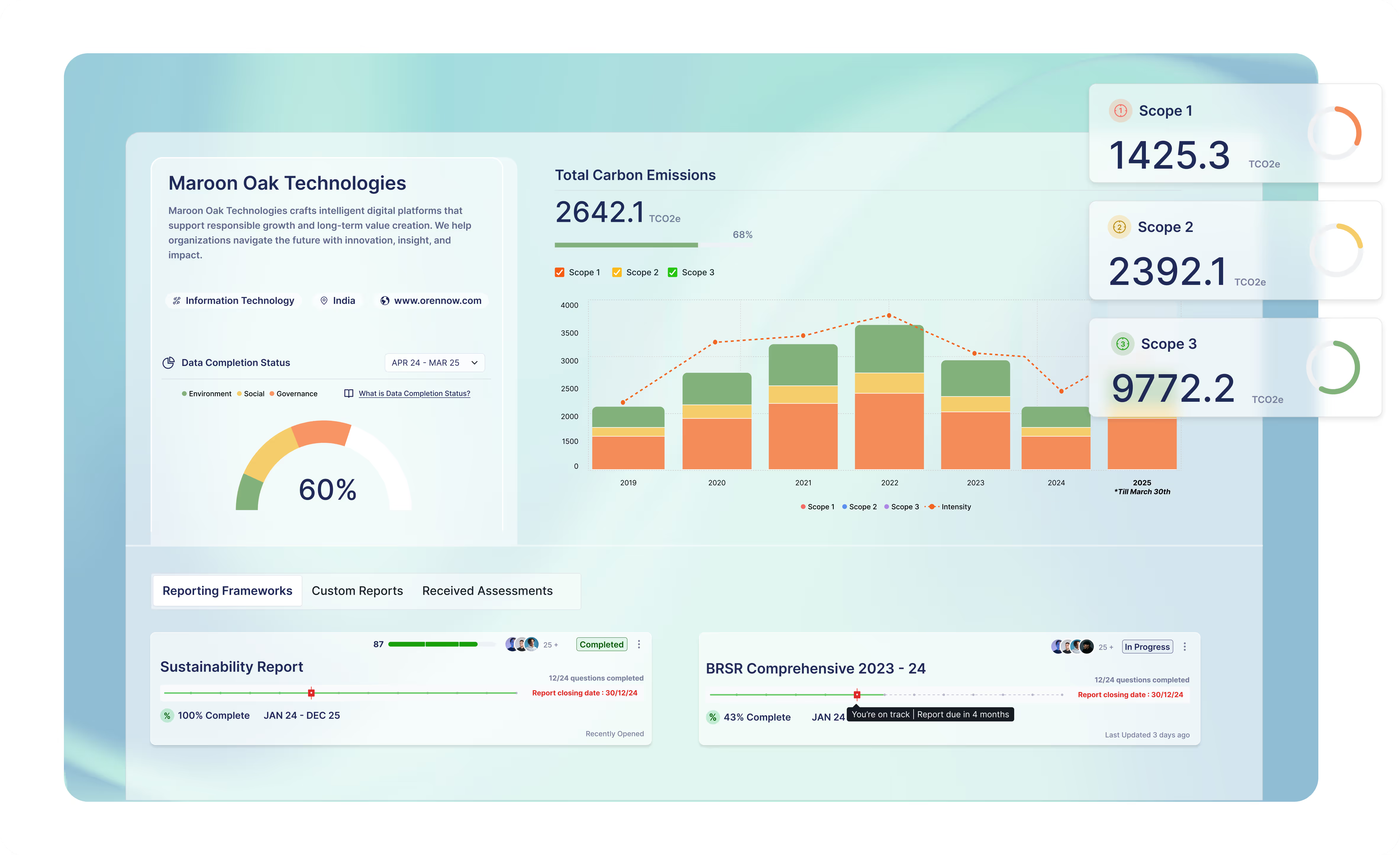
Oren's Sustainability Hub tracks the carbon offsetting vs insetting split end-to-end. Inside-value-chain reductions feed your Scope 1, 2, and 3 inventory with full source traceability; external offsets and CCCs are recorded as separate claim line items with vintage, methodology, registry, and verification status. Oren AI parses settlement statements and project documents into assurance-ready records. The same dataset then feeds your BRSR Core, CDP climate, and IFRS S2 disclosures, with the inset-vs-offset distinction preserved across every report.
Conclusion
Carbon offsetting vs insetting isn't an either-or question for Indian corporates. It's a sequencing question. Reduce inside your value chain first, inset where Scope 3 is material, and offset only the residual emissions you genuinely cannot cut. With CCTS now operational and BRSR Core sharper on inventory disclosure, the companies winning are the ones that can show their work, line by line.
Frequently Asked Questions (FAQs)
Q1. What is the main difference between carbon offsetting and insetting?
Carbon offsetting funds reductions outside your value chain; carbon insetting reduces emissions inside it. Offsetting compensates; insetting actually lowers your reported GHG inventory.
Q2. Are carbon offsets allowed under India's CCTS?
Yes. India's CCTS launched 1 January 2025 includes a voluntary offset mechanism. BEE released Version 1 of the procedure in March 2025 with 8 approved methodologies including renewable energy, green hydrogen, and mangrove afforestation.
Q3. What is a carbon offset example?
Common carbon offset examples: solar farms in Rajasthan, methane capture at a landfill, mangrove planting on the Indian coast, or clean cookstove projects in rural households. Each carbon offset project earns credits per tonne of CO2 avoided or removed.
Q4. Is carbon insetting better than offsetting for ESG?
For investor-grade ESG, insetting is generally stronger because it lowers your reported emissions directly, supports SBTi-aligned targets, and builds value-chain resilience. Offsetting still has a role for residual emissions.
Q5. How many companies use carbon offsetting?
Per CDP, around 60% of disclosing companies used carbon offsetting in 2024. Adoption is higher in hard-to-abate sectors. Insetting is growing fastest in agriculture, FMCG, textiles, and logistics.
Q6. What does carbon offset mean in practice?
A carbon offset is a credit representing one tonne of CO2 reduced or removed outside your operations. You claim it against your residual emissions. The quality of the carbon offset programme (verification, additionality, vintage) determines credibility.

About the author
Olivia Paul
ESG & Sustainability Advisor
Olivia is an ESG & Sustainability Advisor at Oren, focused on ESG reporting and strategy, materiality assessments, GHG inventory, and net-zero roadmaps across manufacturing, financial services, and infrastructure.