Design Thinking for Inclusive Workspaces: Making Disability Access a Priority

Embracing Human-Centred Design for Disability Inclusion
Human-centred and empathy-driven approaches can significantly enhance workplace innovation and inclusivity. For employers, fostering a workspace that supports disability inclusion involves practical steps and design thinking principles. This article explores actionable strategies for creating a more accessible and inclusive work environment.
The Global and Local Context of Disability Inclusion
The World Health Organization estimates over 1 billion disabled individuals globally, including those with age-related impairments. Despite this significant number, only a small fraction—around 10%—has access to products designed specifically for them. In India, a 2019 Business Standard study revealed that persons with disabilities (PWDs) constituted less than 0.5% of employees in top companies, highlighting a significant gap in employment opportunities for PWDs. Contributing factors include inadequate infrastructure, limited sourcing avenues, myths about additional costs, and a general lack of awareness about disability in corporate India.
Notable Examples of Disability-Inclusive Workspaces in India
Several companies in India are leading the way in disability inclusion by integrating accessible design into their core business practices. Here are some exemplary cases:
1. Accenture India

Since 2014, Accenture India has been committed to creating an accessible workplace through its Accessibility Council. The company's efforts include wheelchair-friendly offices, subtitled videos, and available sign language interpreters. Infrastructure improvements such as accessible restrooms, braille stickers in elevators, and high-contrast visual signs enhance the accessibility of their workspace. Accenture is also redesigning high-traffic areas like cafeterias for barrier-free movement.
2. Candor TechSpace (Brookfield Properties)

Candor TechSpace, managed by Brookfield Properties, focuses on inclusive design in its IT/ITES office spaces. Their campuses feature wheelchair parking, access ramps, tactile pavers for navigation, and Braille menus. With a commitment to IGBC Platinum LEED certifications, Candor TechSpace emphasizes universal accessibility, indoor air quality, and thematic landscaping, reflecting a holistic approach to environmental and sustainability considerations.
3. MakeMyTrip

MakeMyTrip stands out for its inclusive employment practices and workplace adaptations. The company provides accessible transportation, reconfigured workstations, and disability-friendly facilities. MakeMyTrip partners with NGOs to train and employ individuals with disabilities in various roles, showcasing its commitment to both employment and professional development.
4. L’Oreal India

L’Oreal India has made significant strides in accessibility since 2017, including hiring individuals with disabilities and conducting external accessibility audits. Recommendations for further improvements include automatic doors, contrasted signage, and slope elevations. L’Oreal’s proactive approach demonstrates a dedication to creating an inclusive work environment.
5. Capgemini India

Capgemini India promotes diversity through its Disability Inclusion Program, focusing on equal opportunities for all employees. The company's approach includes providing accessible infrastructure, IT systems, and reasonable accommodations, supporting a non-discriminatory environment that fosters self-development and career growth for persons with disabilities.
Policy Framework Supporting Disability Inclusion
The Rights of Persons with Disabilities Act 2016 (the ‘Disabilities Act’) represents a significant advancement in disability rights in India, replacing the earlier 1995 Act. It mandates reasonable accommodations in social life, including education, commercial establishments, public buildings, and transport systems, while prohibiting discrimination. The Act recognizes 21 types of disabilities, encompassing both physical and mental conditions, and requires establishments to adopt an Equal Opportunity Policy (EOP).
Employers must ensure facilities and amenities are accessible, list suitable posts for PWDs, and provide assistive devices and barrier-free accessibility. Additionally, establishments must appoint a liaison officer and register their EOP with the Chief Commissioner or State Commissioner.
Industry Initiatives for Disability Inclusion
The industry in India is increasingly advocating for disability inclusion through collective action and collaborative efforts. The Confederation of Indian Industry (CII) launched the India Business and Disability Network (IBDN) in 2019 to promote inclusive, accessible workplaces. The annual CII-IBDN National Conference, held in partnership with the Zero Project, focuses on global networks and innovations for inclusive employment. Notable assistive technologies showcased include mobility aids for visual impairments, SignAble (a live interpretation app in Indian Sign Language), and hands-free devices for computer and smartphone operations.
Best Practices for Implementing Inclusive Design Thinking
To create an inclusive workspace, businesses should focus on the following best practices:
- Invest in Assistive Technologies: Implement assistive technologies and accessibility tools to support employees with disabilities.
- Adopt Universal Design Principles: Design workspaces that accommodate a wide range of abilities and needs from the outset.
- Foster a Culture of Inclusivity: Educate employees about disability inclusion and create a supportive work environment.
- Ensure Compliance with Regulations: Adhere to the Disability Act’s requirements and regularly review and update accessibility features.
Conclusion
In conclusion, adopting human-centered design for disability inclusion is essential for creating more accessible and innovative workplaces. Companies like Accenture, Candor TechSpace, and L’Oreal demonstrate that prioritizing accessibility not only meets legal obligations under the Rights of Persons with Disabilities Act but also enhances productivity and inclusivity. By investing in assistive technologies and fostering a culture of inclusivity, businesses can unlock the full potential of all employees and contribute to a more equitable society.
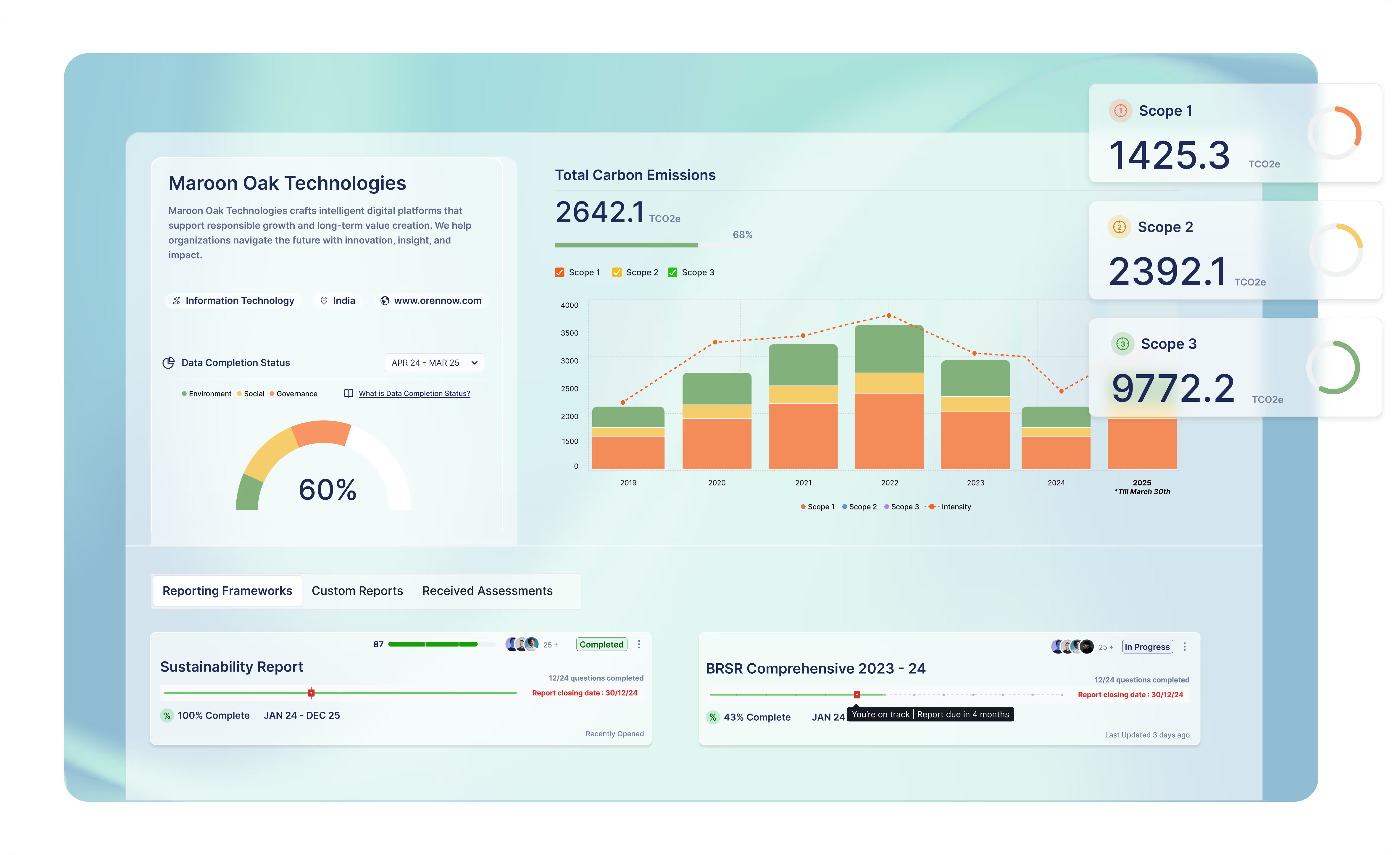
Oren, an ESG software and service company, can support organizations in tracking and improving their disability inclusion efforts. By leveraging Oren's solutions, companies can ensure they meet compliance standards while fostering a truly inclusive and accessible work environment.

About the author
Olivia Paul
ESG & Sustainability Advisor
Olivia is an ESG & Sustainability Advisor at Oren, focused on ESG reporting and strategy, materiality assessments, GHG inventory, and net-zero roadmaps across manufacturing, financial services, and infrastructure.